

Managing pet care expenses often leads cat owners to explore budget supermarket brands while worrying about long-term feline wellness. Feline guardians naturally wonder if affordable commercial formulas meet daily nutritional standards or if cheaper kibble sacrifices vital wellness benefits. Evaluating whether is special kitty good cat food requires looking beyond shelf pricing to inspect nutritional adequacy statements, protein sources, and everyday feeding performance. Cat owners comparing daily feeding expenses can also review our affordable dry cat food guide to understand how different price tiers structure basic nutrition.
Special Kitty is widely recognized as an accessible store-brand line providing complete nutrition across multiple flavors and large bag sizes. The core recipes offer essential vitamins, minerals, and fatty acids designed to sustain adult cats during everyday maintenance. However, understanding how these budget formulas stack up against specialized indoor recipes or moisture-rich canned foods helps owners make informed dietary choices. A balanced perspective allows pet parents to weigh practical household savings against individual feline health needs without relying on unsubstantiated marketing claims.

Pros
- Effective hairball control and weight management in one formula.
- Real chicken as first ingredient with no artificial fillers.
- Well-reviewed by thousands of cat owners for palatability and results.
- Affordable compared to many specialty indoor cat foods.
- Trusted brand recommended by veterinarians.
Cons
- Some cats may not like the taste or texture (as noted in a few reviews).
- Feeding guidelines on package may be higher than needed; requires adjustment for some cats.
- Larger bags needed for multi-cat households; 7 lb may not last long.
If you have an indoor adult cat that struggles with hairballs or tends to gain weight easily, IAMS Proactive Health Indoor Weight Control & Hairball Care Dry Cat Food is a practical, everyday option. Designed specifically for indoor cats, this chicken and turkey recipe combines real protein with a fiber blend to help reduce hairballs, plus L-carnitine to support a healthy metabolism. It is suited for new cat owners, multi-cat households, and budget-conscious pet parents who want reliable nutrition without a premium price tag.
Based on product specifications and user feedback, this formula delivers on its promises. Many cat owners report fewer hairballs and better weight maintenance after switching to this food. The proprietary fiber blend with beet pulp works gently to move hair through the digestive system, while L-carnitine helps indoor cats burn fat effectively. The kibble size is ideal for adult cats, and the taste is well-liked by picky eaters, as seen in overwhelming positive reviews.
Build quality and nutrition are central to this product. IAMS uses real chicken as the first ingredient and avoids artificial fillers, relying on balanced nutrients to support whole-body health. The food is enriched with antioxidants for immune support, as well as calcium and potassium for a healthy heart. It is 100% complete and balanced for adult cats, and the brand is recommended by veterinarians, giving owners confidence in their choice.
Transitioning your cat to this food is straightforward: mix it gradually over four days to avoid digestive upset. The feeding guidelines on the bag provide a starting point, but many cat owners find they can adjust portions based on their cat's activity level and body condition. Daily feeding is simple, and the kibble stores well in a sealed container to maintain freshness. Cleaning up is just a matter of washing the food bowl regularly.
One realistic limitation is that not every cat will accept this food immediately, and a few reviews mention that their cats refused it. Additionally, the 7-pound bag may not last long in a multi-cat household, so consider the larger sizes for better value. Overall, this IAMS formula offers effective hairball control and weight management at an accessible price point, making it a smart choice for indoor cat parents who want a dependable, vet-recommended diet for their feline companions.
Pros
- High-quality animal proteins as first ingredients support lean muscle maintenance.
- Grain-free recipe minimizes allergic reactions and digestive issues in sensitive cats.
- Large can size reduces packaging waste and offers good value per serving.
- Pate texture is smooth and easy to mix with dry food or medications.
- No artificial flavors, colors, or preservatives - a clean ingredient list.
Cons
- Only available in one flavor option per pack; some cats may prefer variety.
- Pate texture may not appeal to cats accustomed to chunks or gravy styles.
- As a new product, there are limited reviews to gauge long-term palatability.
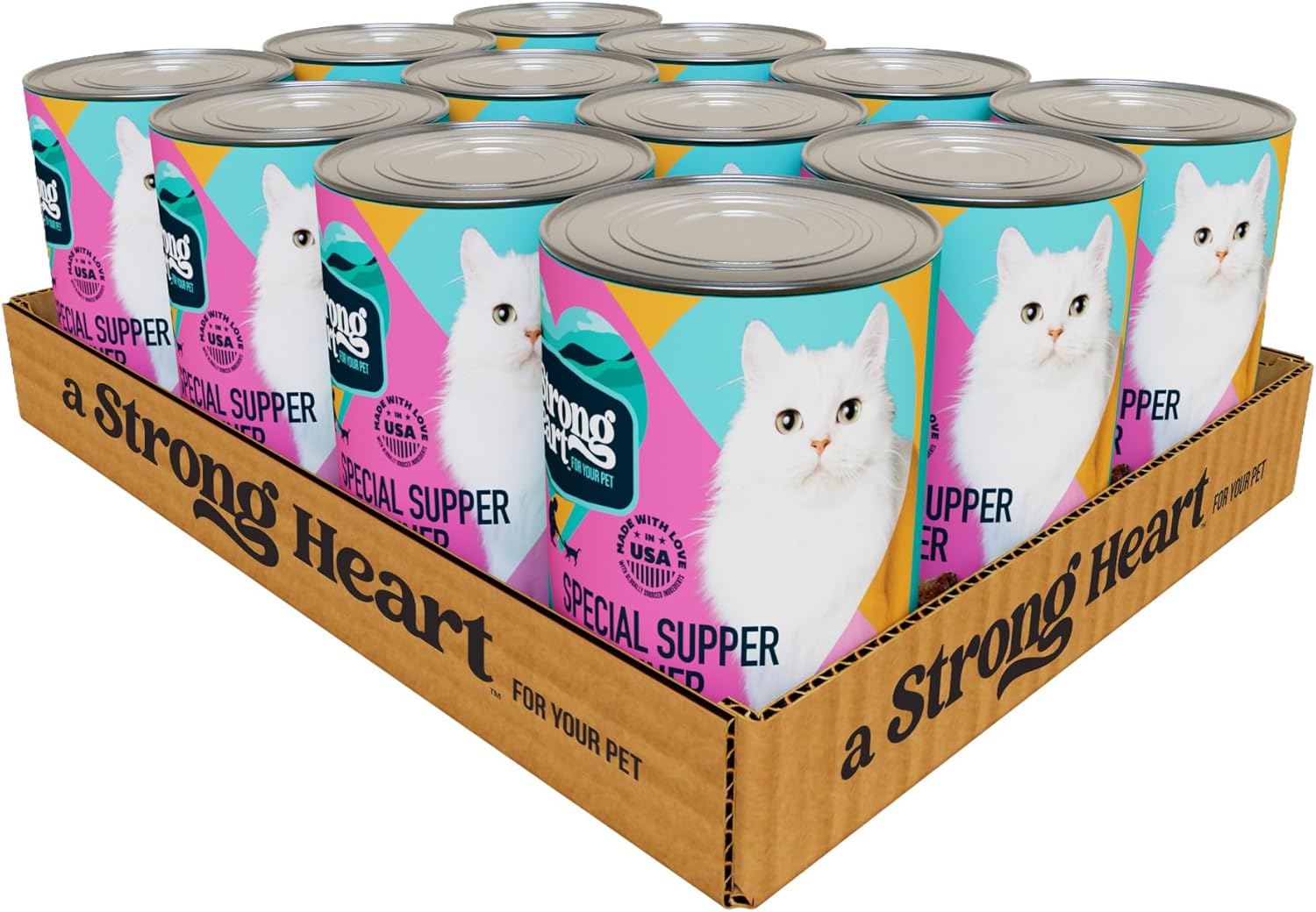
Strongheart Special Supper Dinner is a wet cat food designed to provide complete and balanced nutrition for adult cats. Each 13.2 oz can features real turkey and ocean whitefish as primary proteins, along with liver and heart for added flavor and natural nutrients. The 12-pack offers a convenient supply for households with one or multiple cats.
This food is particularly well-suited for cat owners who prioritize clean ingredients and digestive health. The grain-free formula contains no corn, wheat, soy, peas, legumes, or potatoes, which are common allergens for sensitive cats. It also avoids artificial flavors and preservatives, making it a wholesome choice for everyday feeding. Whether you are a new cat owner looking for a reliable staple or a multi-cat household seeking cost-effective nutrition without sacrificing quality, this product fits the bill.
In terms of real-world use, the pate texture is easy to portion and can be mixed with dry food or water to increase hydration. The savory aroma and rich taste are likely to entice even picky eaters, as the inclusion of organ meats provides natural umami. The formula is designed to support appetite stimulation, which can be especially beneficial for senior cats or those recovering from illness. The can size is generous, and feeding guidelines suggest half a can per 6-8 pounds of body weight per day, making it simple to adjust portions.
Build quality is reflected in the ingredient sourcing and manufacturing. Strongheart is made in the USA by Simmons Pet Food, using globally sourced ingredients that meet safety standards. The recipe is free from common fillers and artificial additives, aligning with the preferences of health-conscious pet parents. The packaging is standard metal cans with easy-open lids, though a can opener may be needed for some.
Cleaning and maintenance are straightforward - simply scoop out the desired amount, serve at room temperature, and refrigerate leftovers. The large can size means less frequent opening, which helps maintain freshness. However, once opened, unused portions should be used within a few days to prevent spoilage.
A realistic limitation is the lack of variety within this pack; all 12 cans are the same flavor. Some cats may prefer a rotation of different proteins. Additionally, the pate consistency might not be loved by cats accustomed to shredded or gravy-style foods. That said, based on the product description and ingredient quality, Strongheart Special Supper Dinner is a strong contender for owners seeking a high-protein, grain-free wet food at an accessible price point. It is a practical buy for both new and experienced cat owners who value simplicity and nutrition.
Strongheart Special Supper Dinner is formulated for all life stages, though adult cats are the primary target. Each 13.2 oz can provides a complete and balanced meal with no need for supplementation. The pate texture is smooth and can be served alone or mixed with dry kibble for added moisture.
Feeding guidelines recommend 1/2 can per 6-8 pounds of body weight per day. Adjust based on your cat's age, activity level, and overall health. Kittens may need up to twice the adult amount. Always provide fresh, clean water. Leftovers should be refrigerated and used within a few days.
The recipe includes essential vitamins and minerals, including taurine for heart and eye health. The absence of grains and legumes makes it easier to digest, and the high moisture content supports urinary tract health. This food is a good choice for weight management as it allows precise portion control.


Evaluating Special Kitty Nutrition, Formulas, and Everyday Value
Determining if is special kitty good cat food comes down to matching nutritional baselines with your household budget and your cat’s specific health profile. The brand provides complete and balanced nutrition that satisfies standard feline dietary requirements at an accessible price point, making it a viable option for basic adult maintenance. However, budget-focused dry kibbles naturally make distinct formulation tradeoffs compared to premium recipes that utilize concentrated real meats or specialized digestive fibers. Understanding these tradeoffs ensures cat owners can provide safe, balanced sustenance while knowing exactly what goes into their pet’s bowl.
Nutritional Adequacy and Complete Daily Nutrition
Commercial pet food in the United States must meet established nutritional adequacy profiles to carry a complete and balanced label. Special Kitty formulas, such as the Chicken and Turkey Flavor dry food, are labeled to deliver 100 percent complete nutrition for adult felines. This regulatory standard confirms that the recipe contains the required proportions of protein, fat, vitamins, and minerals to prevent clinical nutrient deficiencies. Meeting this baseline ensures that healthy adult cats receive the essential fuel necessary for everyday physiological functions.
The packaging for Special Kitty highlights a fortification profile featuring 25 essential vitamins and minerals. These added micronutrients support various bodily functions, ranging from cellular maintenance and bone density to immune system stability. Without these essential additions, an economical grain-heavy or byproduct-based diet would risk critical nutritional gaps. Fortification allows accessible commercial kibbles to reliably sustain adult cats without requiring supplemental meal toppers.
Pet parents must remember that complete and balanced status confirms nutritional sufficiency rather than optimal ingredient prestige. A food that meets basic life-stage requirements will support daily living, but it may not offer the enhanced digestibility or specialized botanical inclusions found in luxury formulas. For cat owners navigating strict grocery allowances, our budget-conscious feeding guide discusses practical ways to maintain complete nutrition without overextending personal finances. Recognizing this distinction helps caregivers maintain realistic expectations regarding everyday commercial pet foods.
Analyzing Core Special Kitty Dry Kibble Recipes
The Special Kitty product line features two predominant dry kibble options designed for adult cats: the Chicken and Turkey Flavor recipe and the Gourmet Formula Seafood Blend. Both options are distributed in substantial 16-pound bags that provide extended feeding duration for single or multi-cat homes. The Chicken and Turkey recipe emphasizes muscle maintenance through a blend of poultry flavors, providing crude protein to support lean body mass. Essential fatty acids are also integrated to help sustain healthy metabolism and daily activity levels.
In comparison, the Gourmet Formula Seafood Blend combines seven distinct ocean flavors, including crab, lobster, salmon, tuna, shrimp, ocean whitefish, and seaweed. This complex flavor profile is crafted specifically to entice felines that prefer savory aquatic aromas over traditional poultry meals. Manufacturer specifications note the inclusion of taurine, an indispensable amino acid that felines cannot synthesize internally. Taurine plays a mandatory physiological role in supporting feline retinal health and healthy cardiovascular function.
Modern iterations of the Gourmet Seafood Blend also feature crunchy kibble pieces designed to scrape against dental surfaces during mastication, helping reduce plaque and tartar accumulation. The formula includes omega-6 fatty acids to nourish the epidermal barrier and support a lustrous coat. Furthermore, the product description specifies the absence of artificial colors or artificial flavors, addressing common consumer preferences for cleaner ingredient decks. These formulation choices show an effort to deliver functional benefits within an economical price tier.
Understanding Ingredient Tradeoffs in Value Pet Foods
Evaluating any value-tier pet food requires understanding how manufacturers balance formulation costs against nutritional requirements. Premium cat foods typically feature whole, deboned meats as their first listed ingredients, whereas budget kibbles frequently rely on poultry byproducts, animal meal, and ground corn or wheat. While byproduct meals supply adequate crude protein and essential amino acids, their digestibility can vary compared to lightly processed muscle meats. Corn and wheat act as carbohydrate binders that provide kibble structure and concentrated caloric energy.
Cats are obligate carnivores that thrive on animal-derived nutrients, yet commercially processed starches are fully digestible when cooked properly into extruded kibble. The presence of grain ingredients allows manufacturers to keep bag costs low while delivering adequate calories for active felines. However, a high carbohydrate proportion may not suit sedentary cats that struggle with excess weight gain or felines with specific carbohydrate sensitivities. Evaluating the ingredient deck helps owners determine whether a carbohydrate-dense kibble aligns with their cat’s metabolic rate.
Guaranteed Analysis panels display crude protein, crude fat, and crude fiber percentages, but these metrics do not reveal protein biological value. A budget kibble may boast adequate crude protein levels while deriving a significant portion of that protein from plant concentrates or byproduct blends. For an ordinary, healthy house cat, these protein sources are sufficient to sustain bodily functions. Nevertheless, owners seeking single-source animal proteins or grain-free formulations must look toward specialized alternative diets.
Comparing Special Kitty to Alternative Diet Categories
Comparing Special Kitty to mainstream competitors illustrates how targeted nutritional benefits differ across brand tiers. A well-known alternative is IAMS Proactive Health Indoor Weight Control, which utilizes real chicken and turkey while formulating for the sedentary lifestyle of indoor felines. IAMS integrates a proprietary beet pulp fiber blend to intercept hairballs before they form, alongside L-carnitine to assist in fat metabolism. It also incorporates specific mineral balances with calcium and potassium to support long-term heart health, offering functional advantages that generic budget kibble does not provide.
Wet food alternatives present another distinct contrast in feline feeding strategies, particularly regarding hydration and ingredient purity. A Strong Heart Canned Wet Cat Food Special Supper Dinner features real turkey, ocean whitefish, liver, and heart packed in high-moisture gravy or pate. This canned option is formulated without corn, wheat, soy, peas, legumes, or potatoes, making it exceptionally gentle on sensitive digestive tracts. The high natural moisture content in wet food also promotes urinary tract flushing, a critical benefit that dry kibble cannot replicate on its own.
The primary distinction between these feeding options lies in formulation purpose and budgetary investment. Special Kitty provides straightforward caloric and micronutrient maintenance in large, shelf-stable bags without premium botanicals or targeted metabolic aids. IAMS provides functional support for hairballs and weight management, while A Strong Heart wet food emphasizes moisture-rich, limited-ingredient animal proteins. Cat owners often find success using a mixed-feeding regimen, pairing economical dry kibble with supplemental wet food to balance cost and moisture intake.
Practical Household Management and Proper Kibble Storage
Purchasing dry cat food in 16-pound bags delivers clear logistical advantages for multi-cat households and busy families. Large bags reduce the frequency of store visits and ensure that pet parents always maintain an ample food reserve. Because dry kibble is highly shelf-stable when unopened, it provides exceptional convenience compared to refrigerated or freshly prepared raw diets. This practical reliability makes large-format dry foods a perennial staple for feline caretakers across the country.
Proper storage techniques are essential to preserve the nutritional potency and freshness of large kibble bags once opened. Exposure to ambient air, warmth, and humidity accelerates the oxidation of surface fats, leading to rancidity and degraded palatability. Caregivers should store the dry food in its original bag inside an airtight, food-grade storage container kept in a cool, dry pantry. Keeping the original packaging also preserves the manufacturer lot code and expiration date in the event of product inquiries.
Portion control represents another vital aspect of managing dry kibble feeding routines at home. Because dry cat food is significantly more calorie-dense than canned food, free-feeding can easily lead to inadvertent overconsumption and feline obesity. Cat owners should consult the feeding guidelines printed on the packaging and use a standard measuring cup to dispense measured meals daily. Monitoring daily consumption ensures that indoor cats maintain healthy body conditions over their lifespan.
Assessing Palatability and Picky Eater Responses
Felines are notoriously discerning eaters driven primarily by aroma, mouthfeel, and moisture levels. Special Kitty dry formulas utilize savory poultry and seafood flavor coatings designed to entice feline olfactory senses upon presentation. Consumer feedback frequently indicates that many domestic cats eagerly accept the taste of the Gourmet Seafood Blend due to its rich aromatic profile. The crunchy, bite-sized kibble shape also accommodates various jaw sizes and chewing preferences.
Palatability can vary widely depending on a cat’s previous dietary background and individual texture preferences. A feline accustomed to rich canned gravies or fresh foods may initially resist dry extruded kibble due to the lack of surface moisture. Conversely, cats raised on crunchy dry diets often transition between commercial poultry and seafood flavors without major resistance. Observing how an individual cat approaches the bowl during the first few feedings provides clear clues regarding personal acceptance.
If a cat hesitates to consume dry kibble, owners can employ practical feeding adjustments to enhance appeal. Adding a small splash of warm water to the bowl releases aromatic volatile compounds and softens the kibble texture. Mixing a spoonful of moisture-rich canned food into the dry portion can also bridge flavor gaps for stubborn eaters. These gentle techniques improve palatability without requiring immediate abandonment of an economical food purchase.
Safe Transition Protocols and Monitoring Digestive Health
Switching a cat to a new food brand requires a gradual, measured transition to avoid gastrointestinal upset. Feline digestive systems host specialized intestinal flora adapted to processing specific protein and carbohydrate ratios. An abrupt change from one commercial recipe to another can trigger transient vomiting, loose stools, or flatulence. A safe transition protocol involves blending the previous food with the new Special Kitty formula over a seven to ten-day period.
The transition should begin with approximately twenty-five percent new food mixed with seventy-five percent of the previous diet for several days. If the cat demonstrates consistent stool quality and normal appetite, the ratio can increase to an even fifty-fifty split. Over the following days, caregivers can increase the proportion to seventy-five percent new food before serving the new recipe exclusively. This gradual adaptation gives intestinal enzymes adequate time to adjust to differing grain and protein concentrations.
Caregivers must monitor litter box output, coat condition, and energy levels closely during any dietary change. If a cat exhibits ongoing diarrhea, lethargy, or recurrent vomiting, owners should pause the transition and revert to the previous diet. Chronic gastrointestinal distress or unexplained weight changes warrant consultation with a licensed veterinarian to evaluate potential underlying food intolerances. Maintaining vigilance during dietary transitions protects feline digestive comfort and overall health.
Determining When Special Kitty Fits Your Cat’s Needs
Evaluating whether Special Kitty is a good cat food ultimately depends on matching its formulation attributes to your individual pet’s circumstances. For healthy adult felines living in budget-conscious or multi-cat households, the brand offers a reliable, 100 percent complete and balanced nutritional foundation that meets baseline life-stage requirements. It provides essential protein, fatty acids, and fortified vitamins without imposing heavy financial burdens on the caregiver. For many families, this dependable affordability makes it a sensible and practical feeding solution.
Cats with specific medical diagnoses, sensitive digestive systems, or advanced age may require specialized veterinary or therapeutic formulations instead. Felines prone to recurrent hairballs or sedentary weight gain may benefit more from targeted recipes like IAMS Indoor Weight Control, while those needing moisture support thrive on wet options like A Strong Heart. By assessing your cat’s health status, activity levels, and water intake, you can confidently decide whether Special Kitty fits your pet’s everyday feeding plan.



Write Your Review
No reviews yet. Be the first to share your experience!