


As cats enter their mature years, their metabolic rates, activity patterns, and digestive efficiencies change dramatically. Knowing exactly %how much food should a senior cat eat per day% is critical for preventing late-life weight gain as well as gradual muscle wasting. Daily caloric requirements shift depending on whether an older feline is a moderately active seven-year-old or a sedentary cat over eleven years of age. Looking at daily feeding instructions on commercial packaging provides a useful baseline, but real-world portions must account for individual body condition and the calorie concentration of specific kibbles.
Many pet parents struggle with measuring routines when transitioning away from free-feeding toward controlled schedules. Balancing moisture needs, protein content, and digestive support can make meal planning feel overwhelming, especially when comparing standard maintenance kibble to specialized senior recipes. Choosing between grain-inclusive formulas with gentle carbohydrates and grain-free blends packed with joint-supporting nutrients requires understanding what your cat truly needs every day. Exploring quality affordable cat food options can help pet owners provide balanced nutrition without stretching the monthly household budget. Establishing a consistent daily measuring habit ensures your aging companion receives balanced sustenance without accidental overfeeding.

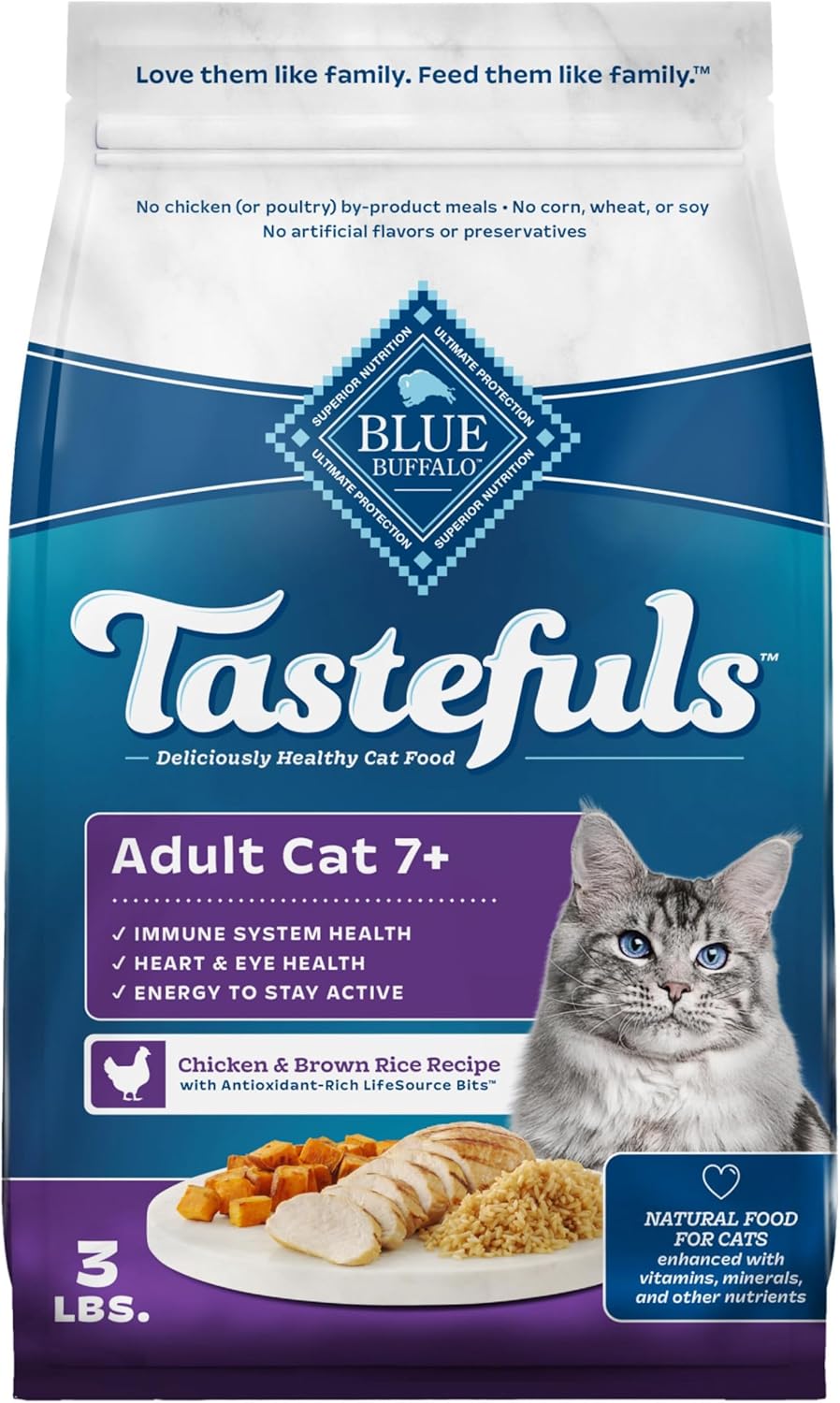
Pros
- High-quality natural ingredients with real chicken as the #1 component; no by-product meals.
- Antioxidant-rich LifeSource Bits support senior cat immune, heart, and eye health.
- No corn, wheat, or soy - less risk of digestive upset for older cats.
- Made in the USA with a reputable brand; 4.7-star rating from thousands of reviews.
- Resealable bag practical for maintaining freshness between feedings.
Cons
- Only available in a 3-pound bag, which may be costly for multi-cat households or larger senior cats.
- Some cats may experience temporary digestive issues (e.g., diarrhea) during food transition.
- Price per pound is higher compared to some other senior cat foods, but reflects premium ingredients.
Blue Buffalo Tastefuls Mature Dry Cat Food is a tailored nutrition option for cats aged 7 and older. This recipe puts real deboned chicken first, delivering high-quality protein to help aging cats maintain lean muscle and energy. Combined with wholesome brown rice and natural ingredients, it avoids the fillers and by-products that can upset sensitive senior systems.
This cat food is especially suited for senior cat caregivers who want to support their cat's immune health, heart, and vision as they age. The inclusion of LifeSource Bits - a precise blend of antioxidants, vitamins, and minerals - sets Blue Buffalo apart from many mass-market brands. Additionally, the formula excludes corn, wheat, soy, artificial flavors, and preservatives, making it a practical choice for cats with food sensitivities.
According to user reviews, many senior cats accept the taste well - even picky eaters - and owners report reduced vomiting and improved digestion after switching. The kibble size is manageable for older cats, and the resealable 3-pound bag is convenient for daily feeding. However, some cats may need a gradual transition over one to two weeks to avoid temporary diarrhea.
Build quality focuses on nutritional integrity: the food is made in the USA with globally sourced natural ingredients. Blue Buffalo's True BLUE Promise guarantees no by-product meals and no artificial additives, providing peace of mind for health-concerned owners. The dry kibble also helps with dental health to some extent by encouraging chewing.
Feeding is straightforward - use the included guidelines based on weight (e.g., 1/4 to 3/4 cup daily for 5-14 lbs) and adjust as needed. The bag's resealable top helps preserve freshness, especially for single-cat households that don't go through food quickly.
While the 3-pound bag size is limiting for multi-cat homes or larger breeds, the formula's targeted senior benefits often outweigh the cost per pound. For owners of a single senior cat who values natural, by-product-free nutrition, Blue Buffalo Tastefuls Mature is a reliable and well-reviewed option that supports healthy aging.


Pros
- Formulated with glucosamine and chondroitin for senior cat joint health.
- Grain-free and natural, with no artificial additives.
- Real deboned chicken as first ingredient ensures high-quality protein.
- Positive user feedback with many cats enjoying the taste and experiencing health improvements.
- Made in the USA with quality control.
Cons
- Some picky cats may refuse this food, requiring a gradual transition.
- Price is higher than some grain-inclusive brands, though many find the quality worth it.
- Bag size may not last long for multi-cat households, but larger sizes are available.
Wellness Complete Health Senior Dry Cat Food is a grain-free, natural dry food designed specifically for older cats. It features real deboned chicken as the first ingredient, providing high-quality protein to support lean muscle mass. Added glucosamine and chondroitin help maintain hip and joint health, which is especially important for senior cats who may be slowing down.
This recipe is ideal for senior cat caregivers, as well as new cat owners looking for a nutritious option that supports overall wellbeing. Many cat owners with multi-cat households also find it works well for cats of different ages, though it is formulated for seniors.
According to user feedback, many cats enjoy the taste and show visible improvements in coat shine, energy levels, and weight management. Several reviewers noted that their older cats became more active and could jump onto furniture more easily after switching to this food. The balanced protein and fat content helps maintain a healthy weight, which is crucial for senior cats prone to obesity.
The dry kibble is small and easy to chew, which is beneficial for cats with dental issues. The grain-free formula avoids common fillers and is made with wholesome ingredients. This food is manufactured in the USA in facilities that adhere to strict quality standards. It contains no artificial colors, flavors, or preservatives, focusing on natural nutrition.
Storage and feeding are straightforward: keep the bag in a cool, dry place, and transition your cat gradually over 7-10 days by mixing with the old food. The feeding guidelines on the bag are clear and adjustable based on your cat's weight and activity level. Some owners mentioned that the bag could be resealed more easily, but transferring to an airtight container is a simple solution.
Overall, Wellness Complete Health Senior Dry Cat Food is a reliable choice for supporting your older cat's health. While the price is slightly higher than conventional brands, the quality of ingredients and positive health outcomes make it a worthwhile investment for many cat owners. For those with picky eaters, a slow transition and patience are recommended.

Pros
- Vet-recommended formula trusted by professionals for senior cat health.
- Natural fibers reduce litter box odor and make cleanup noticeably easier.
- High palatability – many picky senior cats eagerly accept this chicken recipe.
- Supports shiny coats, bright eyes, and steady weight maintenance according to user reviews.
- Contains no artificial additives or chicken by-product meal.
Cons
- Kibble size may be too large for some senior cats with dental issues – consider moistening or choosing a smaller variety.
- Premium pricing compared to some commercial brands, though justified by ingredient quality and vet backing.
- A gradual 7-day transition is recommended to avoid digestive upset, which may require patience for finicky eaters.
Hill's Science Diet Indoor Senior 11+ dry cat food is a specially formulated dry food designed for indoor cats aged 11 years and older. It addresses the unique nutritional needs of senior cats, including digestion support, immune health, and easier litter box cleanup. The chicken recipe provides high-quality protein to help maintain lean muscle, while natural fibers promote regularity and reduce waste odor – a real plus for multi-cat households or owners who dislike daily scooping.
This food is best suited for senior cat caregivers, especially those with indoor cats that may be less active and prone to weight gain or digestive sensitivity. It also works well for new cat owners who want a reliable, vet-recommended option without guesswork. Based on product specifications and user feedback, many older cats experience improved coat shine, steadier energy levels, and fewer digestive upsets after switching to this formula.
In terms of real-world performance, the most praised benefit is the easier litter box cleanup. Owners frequently note less odor and firmer stools, which simplifies daily maintenance. The formula also includes antioxidants and prebiotic fibers (ActivBiome+) to support immune and digestive health. According to user reviews, cats with sensitive stomachs often tolerate this food well, and those with chronic conditions like kidney disease have maintained good quality of life when fed this diet.
Build quality is excellent – Hill's uses natural ingredients sourced from approved suppliers, with no artificial colors, flavors, or chicken by-product meal. The food is manufactured in the USA under strict quality standards, and the company is transparent about its ingredient sourcing. The 3.5 lb bag is convenient for trying out the food or for smaller households, though larger sizes are available for better value.
Transitioning to this food requires a gradual 7-day mix-in period to minimize digestive upset, as recommended on the package. Most cats adapt well, though some picky eaters may initially resist if they are used to a different flavor or texture. The kibble size is standard but could be a minor challenge for cats with missing teeth – adding warm water softens it without sacrificing nutrition. Storage is simple: keep the bag in a cool, dry place under 100°F.
Overall, Hill's Science Diet Indoor Senior 11+ is a solid investment for owners committed to their cat's long-term health. While it's slightly pricier than grocery store brands, the veterinary endorsement and positive outcomes for senior cats make it a worthwhile choice. It's particularly recommended for indoor-only seniors, multi-cat homes where one cat needs senior support, or as a gift for a new cat owner who wants a premium start. If your older cat has been declining on generic food, this formula may help restore vitality and simplify your daily routine.
Feeding guidelines for Hill's Science Diet Indoor Senior 11+ dry cat food depend on your cat's weight and activity level. For an average 10 lb senior indoor cat, the recommended daily amount is about 1/3 to 1/2 cup, split into two meals. Adjust as needed to maintain a healthy body condition – senior cats often need fewer calories than younger adults. Always keep fresh water available, as older cats can be prone to dehydration.
If you are transitioning from another food, mix increasing amounts of Hill's with decreasing amounts of the old food over a 7-day period. Start with 25% new / 75% old, then 50/50, then 75/25, and finally 100% new. This gradual change helps prevent digestive upset. The food should be stored in a cool, dry environment under 100°F (38°C) to maintain freshness. Use an airtight container if you buy larger bags, and check the date code on the bag for freshness. The formula is complete and balanced, so no additional supplements are needed unless directed by your veterinarian.
Practical Guide to Senior Cat Daily Feeding and Portion Control
Answering %how much food should a senior cat eat per day% starts with identifying your individual feline companion’s caloric demand rather than relying strictly on generic measuring scoops. Most mature cats require roughly twenty to thirty calories per pound of healthy body weight each day, depending heavily on their current activity level and metabolic health. A typical ten-pound senior cat generally consumes between one-third and one-half cup of dry kibble daily, broken into distinct meals. Understanding these baseline figures helps owners prevent unintentional weight swings while ensuring aging organs receive adequate daily nourishment.
Determining Daily Food Intake: Calories Versus Cup Measurements
Feeding charts printed on commercial bags measure food in volume increments like cups or fractions of a cup, but volume can be deceptive. Different kibble formulas vary widely in energy density, meaning half a cup of one recipe might deliver significantly more calories than the exact same volume of another. Nutrient-dense dry diets pack a high concentration of energy into smaller physical pieces, requiring smaller daily portions. Measuring your cat’s intake by volume alone frequently leads to overfeeding or underfeeding when switching between brand formulations.
Converting your cat’s daily allowance into calculated caloric requirements provides far greater portion accuracy than relying solely on plastic scoops. Manufacturers calculate calorie counts based on specific recipe formulations, typically listing calories per kilogram alongside per-cup energy values. When pet parents understand the exact caloric needs of a senior pet, adjusting portions during recipe transitions becomes straightforward. Using a standard kitchen scale to weigh daily portions in grams eliminates the volume variance introduced by irregular kibble shapes.
Daily caloric needs naturally shift as cats move from active maturity into true geriatric phases of life. A cat that spends twelve hours napping and only rises for brief strolls requires fewer total calories than an inquisitive senior that explores the house daily. Failing to reduce portion sizes as a feline slows down often results in gradual weight accumulation that stresses aging joints. Conversely, cats that struggle to assimilate calories require carefully concentrated nutrition to avoid unintended lean muscle loss.
Age Milestones: Feeding Cats Seven and Older Versus Eleven and Older
Pet food manufacturers generally classify senior cats into two distinct life stages: mature adults aged seven to ten, and aging seniors aged eleven and older. In the early senior stage beginning at age seven, felines frequently experience an initial metabolic slowdown while maintaining hearty appetites. Formulations like Blue Buffalo Tastefuls Mature Dry Cat Food cater directly to cats aged seven and older by balancing protein and carbohydrates for sustained daily energy. Owners feeding cats in this transitional bracket must monitor weight closely to prevent middle-age feline obesity.
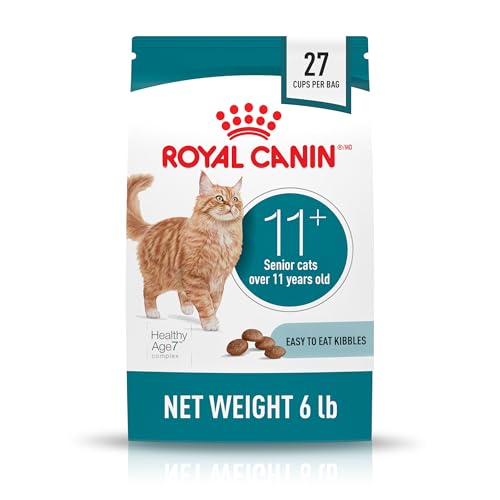
Once a cat crosses the eleven-year threshold, the biological challenges of aging shift noticeably. Geriatric cats frequently experience reduced digestive efficiency, meaning their digestive tracts absorb fats and proteins less effectively than younger adults. Diets such as ROYAL CANIN Feline Health Nutrition Aging 11+ Dry address this distinct life stage with energy-rich kibble designed to maintain body condition and support appetite. Older seniors often require nutrient-dense meals that provide ample daily calories without forcing the cat to consume uncomfortable volumes of food.
Cognitive and sensory changes also emerge as felines advance beyond their eleventh year. Diminished senses of smell and taste can reduce a cat’s natural drive to approach the feeding dish at scheduled meal intervals. Recipes tailored for advanced seniors often incorporate specialized nutrient blends like tryptophan, EPA and DHA, and taurine to support cognitive function and clear vision alongside standard dietary maintenance. Tailoring daily portions to match these shifting age milestones ensures your pet receives age-appropriate nutritional support.
Decoding Package Feeding Guidelines and Serving Baselines
Every commercial senior pet food label features a feeding guide intended as a starting suggestion rather than an absolute rule. These guidelines typically outline a suggested daily serving range correlated with broad target body weights, such as five to nine pounds or ten to fourteen pounds. These printed numbers assume an average adult cat in moderate environmental conditions, which may not match your pet’s precise profile. Relying strictly on the middle or upper limit of the suggested range without assessing body condition often causes accidental overfeeding.
When reviewing a bag of Blue Buffalo Tastefuls Chicken & Brown Rice Senior, pet parents find directions formulated specifically for cats seven years of age and older. The inclusion of wholesome brown rice provides gentle carbohydrates to help maintain active energy levels, while specific feeding guidelines outline sensible serving sizes. Starting at the lower end of the recommended daily amount is usually the safest strategy for sedentary indoor companions. You can gradually increase or decrease the portion after monitoring your cat’s weight over two to three weeks.
Multi-cat households face unique hurdles when attempting to follow commercial feeding instructions accurately. In homes where multiple older felines share space, dominant animals often steal kibble from slower, more timid eaters. This dynamic makes communal bowls or open feeding stations completely unreliable for controlling individual daily intake. Implementing microchip-activated feeders or designated separate meal locations ensures each cat consumes only its measured daily ration.
Evaluating Protein Density and Muscle Maintenance in Aging Cats
Sarcopenia, or the gradual involuntary loss of lean muscle mass, represents one of the most critical health concerns for aging felines. Contrary to historical myths, healthy senior cats actually require robust levels of high-quality animal protein to maintain muscle tone and preserve mobility. The recipe in Purina Pro Plan AdvantEDGE Senior Support Dry Cat utilizes real chicken as the primary ingredient to deliver high dietary protein tailored for older felines. Ensuring that daily portions supply sufficient bioavailable protein helps maintain healthy body strength without excessive bulk.
Digestibility plays a massive role in determining how much protein your cat actually absorbs from its measured daily meal. Senior formulations featuring easily digestible ingredients reduce the physical burden placed on an aging digestive tract while maximizing nutrient uptake. Probiotic supplements added directly to kibble blends help support regular digestion and healthy gut flora, making daily nutrient conversion more efficient. Pairing high-protein recipes with balanced everyday cat nutrition supports long-term vigor without overloading an older system with indigestible fillers.
Owners must recognize that crude protein values listed on the Guaranteed Analysis represent total crude nitrogen rather than amino acid digestibility. High-quality animal proteins provide the complete amino acid profiles necessary for feline physiological maintenance, including essential taurine for heart and eye health. When portioning daily meals, feeding a recipe that derives its protein from identifiable meat sources ensures that every ounce of food contributes to muscle preservation. Consistent protein intake keeps your mature feline agile, capable of jumping, and comfortably mobile throughout its later years.
Balancing Calorie Concentration in Indoor Senior Diets
Senior felines living exclusively indoors naturally burn significantly fewer calories than outdoor or working animals. Without the stimulation of expansive territory, hunting behaviors, or drastic temperature shifts, indoor seniors spend the vast majority of their day sleeping or resting. Formulas like Hill’s Science Diet Indoor, Senior Adult 11 are specifically engineered to accommodate the lower energy expenditures typical of aging house pets. Tailoring portion volume to an indoor lifestyle helps keep mature cats within a healthy weight bracket.
Indoor formulas also frequently incorporate natural dietary fibers designed to aid gastrointestinal movement and promote easier litter box maintenance. Adequate fiber content helps move swallowed hair through the digestive tract smoothly, which is particularly beneficial for older cats that groom frequently while resting. Fiber also adds physical bulk to daily portions, allowing indoor seniors to feel pleasantly full without consuming excess calories. This satisfying satiety reduces incessant begging between scheduled morning and evening feedings.
Grain-free senior foods offer an alternative nutritional approach for pet parents who prefer recipes formulated without traditional grains. Options like Wellness Complete Health Senior Dry Cat Food combine deboned chicken with added joint supplements like glucosamine and chondroitin. These functional ingredients support hip and joint mobility, encouraging aging indoor felines to remain comfortably active. Regardless of whether an owner selects a grain-inclusive or grain-free recipe, matching daily cup portions to actual activity levels remains paramount.
The Impact of Kibble Texture and Dental Health on Daily Consumption
Dental disease, missing teeth, and gum sensitivity frequently affect felines as they navigate their senior and geriatric years. A cat suffering from sore teeth or inflamed oral tissue may struggle to crack standard hard kibbles, leading to apparent loss of appetite or meal avoidance. Senior-specific dry diets often utilize adapted kibble shapes, softer textures, or porous structures that crumble easily under gentle pressure. Easy-to-chew kibbles ensure older felines can comfortably consume their full daily allocation without experiencing mealtime pain.
Observing how your cat interacts with its bowl provides valuable clues regarding whether its food texture is working well. If a senior feline frequently drops kibble pieces outside the bowl or swallows whole nuggets without chewing, dental discomfort may be present. In such cases, lightly moistening the measured portion of dry food with warm water can soften the texture and make swallowing easier. Adding water also delivers beneficial moisture, supporting daily hydration in cats that habitually neglect the water bowl.
Changes in kibble texture should never be introduced abruptly, as sudden dietary switches can trigger gastrointestinal distress in mature cats. If switching to an adapted senior kibble to improve chewing ease, blend the new food into the existing diet gradually over seven to ten days. This gradual transition allows digestive enzymes to adapt while keeping daily caloric intake steady throughout the changeover. Ensuring your cat can physically chew its food comfortably is just as essential as calculating the correct daily amount.
Managing Appetite Fluctuations and Palatability in Older Felines
A decrease in sensory sharpness often makes senior cats far pickier about what they choose to eat from their bowls. As the olfactory senses decline, food that once smelled irresistible may suddenly elicit indifference, causing the cat to leave portions unfinished. Quality senior recipes incorporate natural poultry fats and flavorful coatings to enhance palatability and entice finicky older cats back to the bowl. Ensuring your cat actually finishes its measured daily portion is essential to avoiding gradual malnutrition.
Warming wet food or lightly warming moistened dry kibble releases aromatic compounds that stimulate an older feline’s appetite. Serving meals in wide, shallow dishes can also prevent whisker fatigue, which occurs when sensitive facial whiskers continually brush against deep bowl edges. Small environmental improvements like raising the food dish off the floor reduce neck and joint strain, encouraging comfortable feeding postures. Creating a serene, stress-free dining environment prevents anxiety-induced appetite suppression in sensitive senior felines.
While slight day-to-day fluctuations in food consumption are relatively common, persistent refusal to eat requires immediate investigation. Felines that go more than twenty-four to forty-eight hours without adequate calories face serious health complications, including hepatic lipidosis. Pet parents should never force a stubborn senior cat to undergo prolonged fasting in an attempt to make them accept an unpalatable new diet. If your senior cat consistently ignores its measured daily ration, consult your veterinarian to rule out underlying medical issues.
Establishing Daily Feeding Schedules Versus Free-Feeding Routines
Leaving a full bowl of dry food accessible all day, commonly known as free-feeding, presents substantial risks for aging cats. Free-feeding makes it nearly impossible for pet parents to track exact daily consumption, masking the early warning signs of decreased appetite or overeating. Mature cats allowed to graze continuously often consume excessive calories out of boredom, accelerating unwanted weight gain and joint stress. Transitioning to scheduled meal times provides total control over exact daily caloric intake.
Dividing your cat’s calculated daily food allocation into two, three, or four smaller meals aligns closely with natural feline feeding behavior. In the wild, cats consume multiple small meals throughout the day and night rather than one massive feast. Offering smaller, frequent portions helps stabilize blood sugar levels and places less immediate demand on an aging digestive system. Multiple small meals also prevent gorging behaviors, which frequently lead to post-meal regurgitation in older cats.
Consistent meal times also establish a comforting daily routine that reduces stress in senior cats experiencing cognitive decline. Knowing exactly when breakfast and dinner arrive gives older pets predictable structure that supports emotional wellbeing. Scheduled meals also allow owners to observe eating speed, enthusiasm, and chewing comfort directly twice or three times every single day. This daily visual check provides invaluable insight into your companion’s general health and comfort.
Monitoring Body Condition Score and Adjusting Portions Over Time
Using a Body Condition Score chart is far more reliable for evaluating your senior cat’s physique than staring at numbers on a bathroom scale. Felines can lose vital muscle mass while gaining abdominal fat, maintaining an identical scale weight despite deteriorating physical health. To check body condition, run your hands gently along your cat’s ribcage and spine to feel the layer of fat covering the bones. Ribs should be easily palpable under a slight layer of fat without feeling sharp or protruding visibly.
If your cat’s ribs and hip bones feel pronounced and lack covering fat, its current daily portion is likely insufficient to meet metabolic demands. In contrast, an inability to feel the ribs without pressing firmly indicates that the daily portion contains too many calories for the cat’s activity level. Adjusting daily food amounts by ten to fifteen percent increments allows you to steer body condition back toward an ideal target safely. Re-evaluating your pet’s physique every two to three weeks ensures portions evolve alongside changes in health and aging.
Documenting weekly weights in a dedicated notebook or mobile app creates an objective record of long-term health trends. Subtle weight changes of just a few ounces represent significant percentage shifts in an eight-pound or ten-pound feline body. Catching unintended weight loss or gain early allows you to modify daily portions before significant health repercussions develop. Consistent monitoring transforms daily feeding from a guessing game into a precise, health-promoting routine.
Practical Verification: When to Seek Professional Veterinary Input
Calculating daily feeding portions provides an excellent operational foundation, but individualized health conditions often require specialized adjustments. Chronic ailments common in older cats, such as kidney disease, hyperthyroidism, diabetes, or osteoarthritis, dramatically alter nutritional and caloric requirements. A cat with untreated hyperthyroidism, for instance, may consume double its normal daily portion while continuing to lose weight rapidly. When systemic illness is present, standard commercial feeding guidelines no longer apply.
Routine veterinary wellness visits, ideally scheduled every six months for cats aged seven and older, provide vital opportunities to audit your feeding plan. Your veterinarian can perform blood panels, assess organ function, and evaluate muscle mass to verify whether current daily food portions are appropriate. If therapeutic diets or prescription formulations become necessary, follow your veterinarian’s specific feeding directions rather than standard retail guides. Professional veterinary collaboration ensures that daily meal planning aligns perfectly with your companion’s medical needs.
Managing the daily nutrition of an older feline requires attentiveness, patience, and routine adjustments as your companion journeys through its golden years. By determining caloric needs, observing chewing comfort, dividing portions into structured daily meals, and closely monitoring physical body condition, you can provide ideal dietary support. Tailoring daily intake to your cat’s specific life stage ensures that your feline friend remains nourished, comfortable, and energetic throughout every phase of senior life.


Write Your Review
No reviews yet. Be the first to share your experience!