

Every cat owner eventually wonders whether keeping a feline on the exact same kibble or canned formula every single day is truly beneficial. While cats thrive on consistent routines, their dietary requirements can evolve as they transition from energetic kittens to mature adults or quiet seniors. Deciding whether is it good to change cat food often depends on your pet’s life stage, digestive sensitivity, and overall appetite. Feeding the same formulation indefinitely can sometimes lead to flavor fatigue, while abrupt switches can trigger temporary digestive distress.
Balancing nutritional variety with digestive comfort requires paying close attention to product labels, moisture levels, and protein sources. Many caregivers explore rotational feeding or switch to all life stages cat food options to support multiple felines under one roof. Knowing when a diet shift makes sense, and when stability is better, protects your cat’s gastrointestinal tract while keeping mealtime engaging. Understanding these nuances helps you make confident, informed choices whenever you restock your pantry.
Pros
- High-quality real chicken protein supports everyday feline vitality across all life stages
- High moisture content provides vital hydration for cats that resist drinking still water
- Silky pate consistency works wonderfully for picky eaters and cats with dental sensitivities
- Cooked safely in USDA-inspected USA facilities using simple, recognizable ingredients
Cons
- The 2.6-ounce can size may require opening multiple cans per meal in multi-cat households
- Pate texture may not appeal to cats that exclusively prefer chunky gravies or shredded shreds
- Priced at a premium tier compared to standard commercial grocery store cat foods
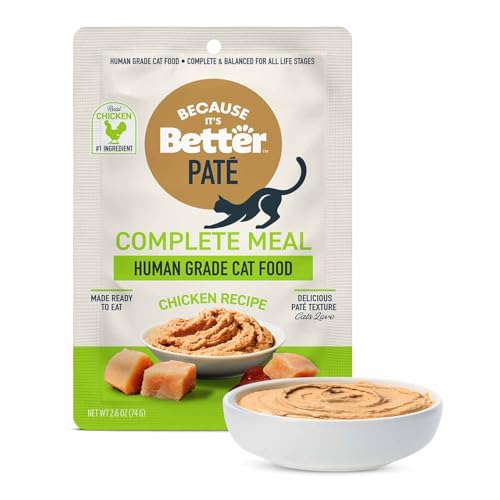
Because It's Better Chicken Pate Wet Cat Food is a premium, all-life-stages canned recipe crafted to deliver balanced daily nutrition in a lickable, smooth consistency. Based on product specifications, this formula focuses heavily on clean ingredient sourcing, relying on real chicken as the primary protein. By gently cooking the recipe to create a uniform pate, it caters directly to cats that prefer a dense, creamy bite rather than loose shreds or gelatinous broths.
This wet food is particularly well suited for health-conscious pet parents, new kitten owners, and senior cat caregivers. Apartment dwellers and single-cat households will appreciate the modest 2.6-ounce tin size, which helps prevent refrigerated leftovers from drying out or going to waste. Furthermore, cats that naturally turn their noses up at drinking still water from a regular bowl can gain essential daily moisture directly through their feeding routine, aiding urinary health without extra fuss.
In terms of palatability and cat comfort, the velvety pate texture works well for a wide range of felines. Young kittens transitioning to solid food can easily lick and chew the tender consistency, while older cats dealing with missing teeth or sensitive gums can eat comfortably without pain. The pure poultry aroma appeals strongly to fussy indoor cats that typically walk away from generic canned options, making mealtime far more peaceful and predictable.
Ingredient standards reflect thoughtful domestic manufacturing. Each batch is made in USDA-inspected kitchens located in the USA using human-grade components. The complete omission of artificial flavors, synthetic dyes, and harsh preservatives means cat parents are feeding a straightforward, wholesome meal that minimizes the risk of digestive upset or tummy sensitivity. The small, pull-tab cans are easy to open without splashing liquids, and cleaning the food dish afterward takes minimal effort.
A realistic consideration with this product is the small serving format. While a 2.6-ounce can is ideal for single-meal freshness, multi-cat households or parents of large-breed adult cats may find themselves emptying several cans every single day. Additionally, cats that crave shredded meat textures may require a slow transition period to get used to a traditional smooth pate.
For cat owners looking to upgrade their pet's daily bowl with a wholesome, protein-dense wet food that supports vital hydration, this recipe offers a dependable solution. It provides peace of mind through clean American sourcing, making it a reliable meal choice for growing kittens, busy adult cats, and aging seniors alike.
This chicken pate recipe focuses on simple, recognizable nutrition driven by genuine poultry protein. Because real chicken stands as the primary component, the food naturally provides the essential amino acids cats require to maintain lean muscle mass, support a lustrous coat, and fuel everyday play sessions.
When switching your cat to this formula, a gradual transition over 7 to 10 days helps prevent digestive upset. Start by mixing a small spoonful of this pate with your cat's current diet, slowly increasing the ratio each day until your companion is fully adjusted to the clean, human-grade recipe.
Many domestic indoor cats struggle to meet their optimal daily water intake, which can lead to urinary tract stress over time. The high natural moisture in this slow-cooked pate provides passive hydration with every bite, helping to keep your cat's kidneys and bladder properly flushed.
The easily digestible, gentle formulation is also beneficial for sensitive stomachs. By skipping artificial colors and unnecessary chemical additives, this wet food promotes regular bowel movements, reduces litter box odor, and supports long-term digestive vitality for cats of all ages.


Pros
- Features real, recognizable cuts of shredded chicken breast as the primary protein source
- Savory natural broth provides an effortless boost to daily feline hydration
- Clean, limited-ingredient recipe free from grains, carrageenan, and artificial additives
- Includes pumpkin and cheese varieties to satisfy picky eaters and support digestive comfort
- Easy-open single-portion cans make meal prep fast and mess-free
Cons
- Formulated as a complementary food topper rather than a complete and balanced standalone meal
- Cats that exclusively prefer dense pates or thick gravies may need time to adjust to shredded meat in light broth
- Compact 2.47-ounce can size may require multiple cans daily in large multi-cat households
Reveal Chicken Variety in Broth Wet Cat Food is a premium complementary wet food designed to enhance everyday feline mealtime. Each 12-pack contains three poultry-based recipes: Real Chicken Breast, Real Chicken Breast with Cheese, and Real Chicken Breast with Pumpkin. Unlike traditional canned foods loaded with thick gums and mystery purees, this formula highlights recognizable, shredded cuts of real chicken breast steeped in a clear, natural broth. The limited-ingredient formula focuses on whole foods without artificial colors, synthetic flavorings, or chemical preservatives, catering directly to pet parents seeking clean nutrition for their pets.
This variety pack is well suited for a wide range of feline lifestyles, particularly picky eaters who turn their noses up at plain dry kibble. It serves as an excellent option for indoor cat owners looking to boost their pet's daily hydration, as cats naturally obtain the bulk of their water intake from their food. Senior cat caregivers and multi-cat households will also appreciate how the aromatic broth coaxes reluctant felines to eat, while kitten parents transitioning young cats to diverse textures can use it as an occasional supplemental treat.
In terms of mealtime performance, the high proportion of authentic animal protein offers exceptional aroma and palatability. Many felines are naturally drawn to the savory chicken broth, which helps promote urinary tract wellness by encouraging moisture consumption without relying on artificial appetite stimulants. The addition of real pumpkin in four of the cans introduces natural dietary fiber, which can gently assist indoor cats prone to hairballs or mild digestive sluggishness. Meanwhile, the cheese recipe delivers an enticing aroma that appeals to finicky eaters needing an extra incentive to finish their bowl.
From a packaging and storage standpoint, the 2.47-ounce aluminum cans are compact, stackable, and fitted with smooth pull tabs for convenient opening. Apartment dwellers and busy professionals will find the single-serve portions easy to store in tight pantry cabinets without requiring plastic can lids for half-used tins. Because the food is served in a thin broth rather than a heavy gelatinous gravy, it pours cleanly out of the can into ceramic or stainless steel feeding dishes, making daily cleanup quick and hassle-free.
One primary consideration for cat owners is that Reveal wet food is explicitly formulated as a complementary food rather than a complete and balanced standalone meal. Because it lacks added vitamin and mineral premixes like taurine, pet parents must feed it alongside a complete dry food or nutritionally balanced wet diet to ensure their cat meets all daily dietary requirements. Additionally, cats that specifically prefer dense loafs, smooth pates, or thick gravies may take time to adjust to shredded chicken strands in light broth.
Overall, Reveal Chicken Variety in Broth serves as a wholesome, moisture-rich meal topper that turns dry kibble into a flavorful feast. It offers reliable value for cat owners prioritizing real ingredients, natural hydration, and varied flavors without artificial fillers. For pet parents wanting to spoil their felines with clean protein while supporting healthy hydration, this variety pack delivers a simple and practical feeding upgrade.
Reveal Wet Cat Food is designed specifically as a complementary food, meaning it is meant to supplement your cat's primary diet rather than replace it entirely. To maintain proper feline nutrition, pair these cans with a high-quality, complete and balanced dry kibble or balanced canned food that contains essential vitamins, minerals, and taurine.
Serving this shredded chicken formula as a topper adds vital moisture to daily dry food, which supports healthy kidney function and optimal urinary tract wellness. You can mix half a can directly into kibble during breakfast or dinner, or serve it as a midday hydration treat to keep mealtimes engaging for your cat.
Many domestic cats struggle to drink adequate water from traditional bowls, making wet food broths an effective way to improve daily hydration. Increasing fluid intake helps flush the urinary system and maintain healthy bladder function across all life stages, especially for indoor cats and older felines.
The limited-ingredient profile makes these recipes gentle on sensitive feline stomachs, while real chicken breast provides lean, highly digestible protein for muscle maintenance. Additionally, the included pumpkin variety delivers natural prebiotic fiber to support regular bowel movements and reduce the frequency of uncomfortable hairballs.


Pros
- Price is very affordable for a 32-can pack, especially for multi-cat households or community cat feeders
- Made in the USA with real meat and poultry, no artificial flavors or colors
- Gentle on sensitive stomachs, according to many user reviews, and easily digestible
- Variety of flavors and textures helps prevent cats from getting bored with their food
Cons
- Some cats may not like the texture or smell, as a few reviews mention a chemical odor or refusal to eat
- The shredded variety may have large chunks that need chopping for small or senior cats
- Not a premium brand; ingredients list is decent but not top-tier, so it may not satisfy owners seeking ultra-premium nutrition
Strongheart Dinner Variety Pack is a 32-can wet cat food set that brings together four flavors: chicken dinner pate, turkey dinner pate, salmon dinner pate, and chicken & salmon shreds in gravy. Each 5.5-ounce can features easy-pull tabs, making feeding time less fussy for busy cat owners. This pack is designed to provide complete and balanced nutrition for cats of all life stages, from kittens to seniors, and is made in the USA with globally sourced ingredients.
This variety pack is a smart choice for budget-conscious cat parents, especially those with multiple cats or picky eaters. The mix of pate and shredded textures gives cats a little culinary adventure at each meal, which can help prevent mealtime boredom. Many user reviews from multi-cat households and feral cat caregivers report that their cats eagerly eat this food. The price point is notably lower than many premium brands, making it easier to stock up without breaking the bank.
In terms of nutrition, the food includes real chicken, turkey, and salmon as primary protein sources. It is free from artificial flavors, and the ingredients are chosen to be gentle on sensitive stomachs. However, some reviews note a slight chemical smell to certain flavors, and a few picky cats refused to eat it. The shredded variety sometimes contains large chunks that may need to be broken up for small cats or seniors with dental issues. Overall, the product delivers adequate nutrition for everyday feeding, though it may not satisfy owners seeking the highest quality ingredients.
Ease of use is a strong point: the pull-tab cans open quickly, and the 5.5-ounce size is convenient for a single meal for most cats. The 32-pack is heavy but manageable, and it stores well in a pantry. For those with strays or feral cats, this food is a reliable, affordable option that many outdoor cats seem to enjoy. Subscribing can save even more, as one reviewer noted ordering every five weeks for two feral guests.
Realistic limitations include the possibility that some cats will not like the texture or scent. A few users reported that their cats turned up their noses even after a slow introduction. The ingredient list is decent but not as clean as premium brands like Wellness or Tiki Cat, so if your cat has specific dietary needs or allergies, you may want to check the label closely. Also, the pate style can be a bit dry, so adding a little warm water may help increase hydration.
In summary, the Strongheart Dinner Variety Pack is a solid value for the price. It works well for multi-cat households, community cat feeders, or owners who want a reliable, affordable wet food that most cats will eat. While it may not be the top choice for the most discerning feline palates, it offers good nutrition, U.S. production, and convenience. If you’re looking to stretch your pet food budget without sacrificing complete nutrition, this pack is worth trying.

Pros
- Premium, transparent ingredients that mimic a natural carnivore diet
- High moisture content supports hydration and kidney health
- Wide variety pack appeals to even the pickiest cats
- Grain-free and low-carb formulation ideal for weight and digestive management
- No artificial colors, flavors, or preservatives
Cons
- small 2.8 oz cans may require multiple cans per meal for larger cats or multi-cat homes
- Price point is higher than many mainstream brands
- Some picky cats may need a transition period from lower-quality foods
Tiki Cat After Dark Variety Pack is a premium wet cat food designed to satisfy a cat’s natural carnivorous instincts. Each can features real shredded chicken and nutrient-rich organ meat in a luscious broth, providing a high-protein, grain-free meal that mirrors what cats would eat in the wild. This 12-pack of 2.8-ounce cans offers a selection of flavors, making it a versatile choice for households with finicky felines or multiple cats.
This food is best suited for health-conscious cat owners who prioritize ingredient quality and a species-appropriate diet. It works well for adult cats of all breeds and life stages, and can be a great option for indoor cats that need extra hydration. The high moisture content helps prevent urinary issues and supports overall kidney function, a common concern for cats that don't drink enough water. According to user reviews, many cats who were previously reluctant eaters became enthusiastic after switching to Tiki Cat After Dark.
In terms of real-world performance, cat owners have reported noticeable improvements in coat condition, energy levels, and litter box habits. The shredded texture and rich aroma appeal to even the pickiest cats, though a few reviews note that some cats accustomed to stronger-smelling foods may need a gentle transition. The variety pack includes flavors like chicken with quail egg, chicken liver, and chicken heart, which provide a range of nutrients and keep mealtime interesting. The food is non-GMO, free from grains, potatoes, and artificial additives, aligning with many vet-recommended feeding guidelines.
Build quality and packaging are practical: the cans have easy-open pull tabs, and the 2.8-ounce size is ideal for portion control. However, for larger cats or multi-cat households, you may need to serve multiple cans per meal, which can add up in cost. The manufacturer recommends serving at room temperature and refrigerating any unused portion. There are no BPA concerns mentioned in the product details, but the cans are standard aluminum. The food is produced in Thailand under Tiki Pets' quality standards.
Ease of use is straightforward: just open and serve. For cats new to this food, a gradual transition over 5–7 days is recommended to avoid digestive upset. Some owners have found that mixing a small amount of their cat’s previous food helps increase acceptance. Cleaning is minimal since it’s a wet food; simply dispose of empty cans and wash feeding bowls after each meal. Storage of unopened cans is easy, as they come stacked in a compact box.
Realistic limitations include the premium price and the small can size. If you have multiple cats or a large breed cat, feeding exclusively this brand can become expensive. A few isolated reviews mention that not every cat took to it, but the majority report high enthusiasm. Overall, Tiki Cat After Dark Variety Pack is an excellent choice for cat owners who want to prioritize high-quality, nutrient-dense food without fillers. It’s especially recommended for new cat owners looking to start off on the right paw, as well as experienced caregivers seeking to upgrade their cat’s diet.
Tiki Cat After Dark is formulated to support a cat's natural dietary needs as obligate carnivores. The high-protein, low-carbohydrate recipe helps maintain lean muscle mass and supports a healthy metabolism. Real organ meat provides essential taurine, a critical amino acid for heart and eye health. The elevated moisture content aids in hydration, which is key for preventing urinary tract infections and kidney disease. Many reviewers reported improved coat shine and reduced shedding after switching to this food.
Each 2.8-ounce can provides a complete and balanced meal for adult cats. Tiki Cat recommends feeding 1 can per 2–2.5 lbs of body weight daily, adjusting based on activity level. Because the cans are small, multi-cat households may need to open several cans per feeding. The food can be served alone or mixed with dry kibble. Always provide fresh water alongside wet food. Unopened cans have a long shelf life; once opened, refrigerate and use within 2–3 days.
Evaluating When, Why, and How to Change Your Cat’s Diet
Yes, changing cat food can be highly beneficial for feline wellness, provided the transition is conducted deliberately and for the right reasons. Rotating formulas offers diverse sensory stimulation, prevents severe fixation on a single texture, and ensures your pet receives balanced amino acid profiles over time. However, shifting foods too rapidly or without understanding nutritional adequacy can trigger digestive upset, including vomiting and loose stools. Finding the right balance between nutritional variety and gastrointestinal stability is essential for maintaining long-term feline vitality.
The Benefits and Tradeoffs of Dietary Variety
Offering dietary variety can protect your cat from developing behavioral food neophobia, where an animal refuses any food that differs from its usual meal. Cats fed the exact same recipe for years often struggle when manufacturers alter ingredient sourcing or discontinue a product line. Introducing varied tastes early in adulthood helps felines adapt easily to future dietary shifts. Rotational feeding also broadens your cat’s exposure to different animal proteins, helping prevent boredom at the feeding dish.
Despite these clear advantages, frequent or erratic food switches present legitimate gastrointestinal risks. Unlike humans or omnivorous dogs, cats possess specialized digestive systems with sensitive intestinal microbiomes tailored to process specific nutrient ratios. Sudden changes in fat content, fiber sources, or protein structures can overwhelm intestinal flora, leading to gas, regurgitation, or sudden diarrhea. Therefore, variety should always be introduced as a structured rotation rather than an unpredictable daily experiment.
Caregivers must also recognize that not every feline tolerates dietary rotation equally well. Cats with underlying gastrointestinal sensitivities often perform significantly better on a predictable, consistent recipe. If your feline companion displays a history of delicate digestion, stability takes priority over culinary variety. Observing your individual cat’s reaction to recipe changes provides the best indicator of whether a rotational feeding strategy supports their comfort.
Legitimate Reasons to Switch Your Cat’s Daily Diet
A primary reason to change cat food involves natural life-stage progression. Growing kittens require calorie-dense formulations with elevated protein, calcium, and phosphorus to fuel rapid bone and muscle development. As kittens approach twelve months of age, transitioning them to an adult maintenance diet prevents excess weight gain. Later in life, senior cats often benefit from adjusted mineral ratios, easier-to-digest proteins, and increased moisture to support aging kidneys and joint mobility.
Developing health conditions or physical sensitivities can also necessitate a permanent food transition. A veterinarian might advise changing diets to manage urinary pH, address chronic hairballs, or support skin health if food intolerances emerge. In these scenarios, switching to a targeted recipe is medically indicated rather than a matter of owner preference. Caregivers should closely follow professional guidance rather than self-diagnosing medical issues through trial-and-error dietary changes.
Product discontinuations, manufacturer reformulations, and household budget changes represent practical everyday reasons for switching foods. When a familiar brand becomes unavailable, pet parents must identify alternative formulas with similar nutritional profiles and moisture levels. Exploring affordable wet cat food options allows owners to maintain high nutritional standards without exceeding household budgets. Planning these transitions ahead of time prevents the stress of emergency substitutions when the current food supply suddenly runs dry.
Complete Meals Versus Complementary Cans During a Transition
One of the most dangerous oversights during a diet switch is confusing complementary cat food with complete-and-balanced meals. A complete-and-balanced formula contains every essential vitamin, mineral, fatty acid, and amino acid, such as taurine, required to sustain feline life. In contrast, complementary foods serve purely as hydration toppers, flavor enhancers, or occasional treats. Feeding a complementary food as a primary diet can cause severe nutritional deficiencies over time.
For instance, products like Reveal Chicken Variety in Broth Wet Cat Food are explicitly labeled as complementary foods designed to accompany complete diets. This formula features prime cuts of chicken breast suspended in natural broth without added vitamin premixes or mineral fortification. Serving this style of food provides exceptional hydration and enticing aroma, which helps coax finicky cats toward their bowls. However, it must always be paired with a nutritionally complete base to prevent dietary imbalances.
Conversely, canned diets such as Tiki Cat After Dark, Variety Pack deliver complete and balanced nutrition across all life stages. This recipe incorporates nutrient-dense organ meats alongside shredded poultry in a luscious broth to meet complete physiological standards. Always examine the nutritional adequacy statement printed on the packaging before replacing your cat’s main meal. Verifying that the replacement recipe satisfies complete daily requirements ensures your pet stays healthy throughout the change.
Gastrointestinal Adaptation and the Feline Digestive Tract
Felines are obligate carnivores whose digestive systems function with remarkable biochemical precision. Their stomachs maintain an acidic pH designed to break down animal proteins efficiently and neutralize potential environmental pathogens. Within the intestines, specialized colonies of beneficial bacteria assist in fermenting soluble fibers and absorbing vital micronutrients. When a cat consumes identical food for months, this bacterial population becomes specialized for that exact ingredient profile.
Abruptly introducing an unfamiliar formulation disrupts this delicate microbial equilibrium. If an old diet relied on poultry and rice while a new food introduces beef and pea starch, the gut microbiome requires time to rebalance. Without an adjustment period, undigested proteins and novel fats draw excess water into the bowel, provoking diarrhea. Similarly, unaccustomed textures or rich organ meats can irritate the gastric lining, prompting acute regurgitation.
Allowing adequate time for enzymatic and microbial adaptation prevents nearly all common switching complaints. Gradual exposure gives intestinal bacteria the necessary buffer to shift metabolic pathways without inflammatory flare-ups. Slow transitions also let caregivers observe subtle changes in stool consistency or energy levels before full dietary adoption. Respecting feline gastrointestinal physiology turns an otherwise disruptive process into a smooth, comfortable transition.
The Standard Progressive Mixing Protocol
Implementing a gradual, progressive mixing schedule represents the gold standard for switching cat foods. Over a period of seven to ten days, caregivers should slowly alter the proportions of old and new food in the bowl. During days one and two, offer approximately seventy-five percent old food combined with twenty-five percent new food. This modest introduction allows your cat’s olfactory senses and digestive enzymes to accommodate the new recipe comfortably.
By days three and four, adjust the mixture to an even split of fifty percent old food and fifty percent new food. If your cat accepts this stage with consistent appetite and firm stools, move to seventy-five percent new food and twenty-five percent old food on days five and six. By days seven through ten, you can complete the transition to one hundred percent of the new formula. Extending this schedule to two full weeks is advisable for felines known to possess delicate digestive systems.
If loose stool, soft feces, or vomiting occurs at any point in the schedule, pause the progression immediately. Revert to the previously tolerated ratio for several days until digestion stabilizes completely before attempting further increases. Rushing through the schedule rarely saves time, as treating acute gastrointestinal irritation creates extended setbacks. Patience and careful observation remain your most valuable tools during any diet transition.
Texture Preferences, Palatability, and Protein Rotation
Cats are notoriously sensitive to food texture, mouthfeel, and serving temperature. A feline accustomed to minced shreds in gravy might flatly reject a dense pate, even if the primary protein remains identical. Recipes like Because It’s Better Pate Wet Cat Food, Chicken emphasize a smooth, slow-cooked pate consistency that appeals to cats preferring uniform textures. Understanding your cat’s specific tactile feeding preferences helps you select replacement foods that won’t trigger immediate bowl strikes.
When implementing a protein rotation, single-species recipes offer greater control than multi-meat blends. Introducing Because It’s Better Pate Wet Cat Food, Turkey allows owners to assess poultry tolerance without confounding variables. Alternatively, trying alternative protein cat food recipes provides opportunities to introduce distinct novel meats like beef, salmon, or duck. Rotating among high-quality protein sources keeps mealtime engaging and expands dietary resilience across your cat’s lifespan.
If your feline appears hesitant when confronted with a new texture, warming the food slightly can dramatically increase palatability. Gently warming wet food to room temperature or body temperature releases natural aromatics that stimulate feline olfactory receptors. Never microwave food in metal cans, and always stir thoroughly to eliminate localized hot spots that could burn sensitive feline mouths. Small adjustments in presentation often bridge the gap between stubborn refusal and enthusiastic acceptance.
Analyzing Label Information and Caloric Density
Comparing guaranteed analysis panels is crucial whenever you evaluate a potential replacement cat food. Two foods that look nearly identical in a bowl can carry drastically different moisture, fat, and caloric levels. Dry kibble concentrates energy into small volumes, whereas wet foods typically contain between seventy-five and eighty-two percent moisture. When switching between formats or brands, calculating portion sizes based on caloric content rather than raw volume prevents unintentional weight fluctuations.
Carefully read the ingredient panel to verify the nature and quality of primary protein sources. Reputable formulations highlight named animal proteins, such as chicken, turkey, or beef, at the very beginning of the ingredient deck. Multipack options like A Strong Heart Canned Wet Cat Food showcase real chicken, turkey, and salmon to support lean muscle maintenance across adult cats. Identifying clear, whole-food protein listings helps ensure you are not trading a premium formula for an inferior substitute.
Pay close attention to serving recommendations provided on the manufacturer packaging. Feeding guides provide general starting baselines, but active cats, indoor loungers, and neutered felines require individualized portion adjustments. Measuring daily rations with a standard measuring cup or kitchen scale eliminates guesswork during the transition phase. Monitoring your cat’s body condition score over subsequent weeks will indicate whether feeding quantities require minor calibration.
Managing Sensitive Stomachs and Picky Eaters
Switching foods requires extra caution if your cat has a sensitive stomach or a stubborn temperament. Felines with delicate digestive tracts often respond poorly to recipes containing complex artificial thickeners, artificial colorings, or unnecessary fillers. Selecting easily digestible formulas, such as A Strong Heart Canned Wet Cat Food with gentle poultry recipes, minimizes mechanical strain on sensitive digestive systems. Choosing simple, clean ingredient decks reduces the likelihood of adverse food reactions during diet updates.
Picky felines present an entirely different hurdle, often choosing to starve rather than eat an unfamiliar recipe. This behavior is medically dangerous, as cats that refuse food for more than twenty-four to forty-eight hours risk developing hepatic lipidosis, a severe liver condition. Never attempt a cold-turkey switch with a picky cat in hopes that hunger will compel them to eat. If your cat refuses a mixture containing just ten percent new food, back up and proceed in tiny incremental steps.
Using natural flavor enhancers can ease the introduction of new foods for reluctant eaters. Adding a small spoonful of aromatic broth, such as the natural liquid found in Reveal canned recipes, can stimulate appetite without upsetting digestion. You can also mix a small topper of pure freeze-dried meat or a lickable treat over the new recipe to create positive mealtime associations. Once the cat willingly consumes the blend, you can gradually phase out the topper while maintaining the core diet.
Monitoring Post-Transition Health and Veterinary Indicators
The transition process does not conclude the moment your cat reaches one hundred percent of the new recipe. Careful observation over the following four to six weeks confirms whether the replacement diet truly agrees with your pet’s system. Inspect the litter box daily to verify that stool consistency remains firm, well-formed, and free of mucus or blood. Persistent soft stool indicates that the recipe may be too rich, poorly digested, or mismatched to your cat’s intestinal flora.
External physical markers offer valuable insights into long-term nutritional compatibility. A well-suited diet produces a glossy, smooth coat with minimal dander, bright eyes, clean teeth, and stable energy levels throughout the day. Conversely, dull fur, excessive shedding, scratching, or sudden lethargy suggest that the new formula is failing to meet your cat’s metabolic needs. Weighing your pet monthly helps you catch subtle weight gains or losses before they develop into serious health problems.
Recognizing when dietary symptoms require professional medical care protects your cat from avoidable complications. If your cat develops persistent vomiting, intractable diarrhea, severe lethargy, or complete refusal to eat, consult a veterinarian immediately. These warning signs may indicate an underlying gastrointestinal illness, food allergy, or systemic imbalance rather than a simple transition hiccup. Partnering with your veterinary team guarantees that all dietary decisions support your feline companion’s ongoing health and longevity.


Write Your Review
No reviews yet. Be the first to share your experience!