

Offering occasional snacks is one of the most rewarding ways to interact with your pet, but curious pet parents frequently wonder what food can i give my cat as a treat without disrupting their daily nutritional balance. While commercial kibble or canned food provides standard daily sustenance, snacks can reinforce bonding, assist with positive reinforcement training, or simply deliver a pleasant change in daily routine. Cat owners often balance everyday grocery budgets with quality meals, much like when selecting budget cat food choices for standard bowls. Understanding the clear distinction between supplemental treats and complete daily diets ensures your pet stays healthy while enjoying special rewards.
Cats are obligate carnivores with unique physiological requirements, meaning their digestive systems thrive best on meat-based proteins rather than carbohydrate-heavy table scraps. Evaluating ingredients, texture preferences, and exact caloric intake prevents unintentional weight gain or digestive upset during treat time. From soft chewy morsels to lickable meat purees and small portions of premium canned pate, pet owners have several safe feeding avenues to explore. By understanding appropriate treat portions and label claims, you can spoil your companion safely while maintaining optimal daily nutrition.


Pros
- Simple, limited-ingredient formulas featuring recognizable real meat and fish proteins
- Velvety purée consistency provides gentle hydration and easy eating across all life stages
- Convenient single-serve squeeze pouches reduce mess and keep individual portions fresh
- Three distinct poultry and seafood recipes help prevent mealtime boredom in multi-cat homes
Cons
- Formulated strictly for intermittent or supplemental feeding rather than a complete balanced meal
- Eager cats may attempt to bite through the thin foil sachet if fed too quickly by hand
- Cats with specific seafood aversions may leave behind the tuna recipes in the variety pack
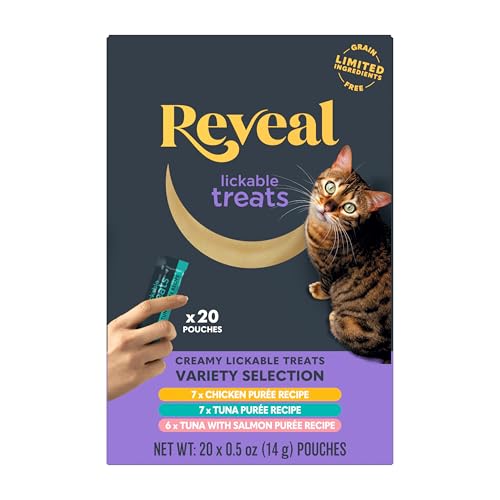
Reveal Fish & Chicken Variety Lickable Cat Treats are moisture-dense, purée-style treats formulated to offer cats a rich, limited-ingredient reward. Packaged in convenient 0.5-ounce squeeze sachets, these treats feature real proteins without unnecessary fillers. Based on product specifications, each 20-pack contains three popular flavors: seven Chicken Purée pouches, seven Tuna Purée pouches, and six Tuna with Salmon Purée pouches, providing a varied selection that helps keep treat time exciting.
This variety pack is well suited for a wide range of felines and owners, including multi-cat families, apartment dwellers looking for mess-free rewards, and caregivers supporting senior cats. Cats experiencing dental sensitivity or reduced chewing capacity often manage velvety lickable treats far better than crunchy biscuits. Additionally, new cat parents can use these hand-held tubes to build trust with shy rescues or kittens, turning cautious introductions into gentle, positive experiences.
In terms of practical performance, the ultra-smooth texture provides notable enrichment and functional benefits. Many cat owners find that lickable treats serve as an effective way to boost daily moisture intake, especially for felines that avoid drinking from traditional water bowls. The puree also acts as a practical aid for administering medication, allowing pet parents to disguise crushed pills or liquid drops without the stress of force-feeding. Squeezing the treat directly from the pouch creates a shared bonding activity that can distract nervous cats during nail trimming or brush sessions.
The ingredient quality focuses on simplicity and transparency. The recipes rely on natural proteins and exclude artificial flavors, synthetic colors, and artificial preservatives. For cats with sensitive digestive tracts, the limited-ingredient profile makes it easier to track what goes into their bowl. The individually sealed foil tubes preserve moisture and aroma until opened, meaning you can carry a sachet during vet visits or travel without worrying about refrigeration beforehand.
As with any specialty snack, there are a few practical considerations to note. These purée sachets are designed strictly for supplemental feeding and do not provide the complete nutrition required for daily meals. Some cats may get overly enthusiastic and attempt to nip at the edge of the foil tube, so caregivers may prefer dispensing the purée onto a shallow plate, a lick mat, or over dry kibble. Overall, this variety pack represents a practical, high-value addition to any pet pantry, balancing natural ingredients with reliable cat acceptance.
Reveal Lickable Cat Treats are formulated with a focused, limited-ingredient philosophy centered around real animal protein. Because the recipe emphasizes simplicity, it omits artificial colors, synthetic flavors, and chemical preservatives, making it a reliable option for cats that require a clean, recognizable ingredient profile.
These treats can be served directly from the squeeze sachet as a hand-fed reward, squeezed across dry kibble to encourage reluctant eaters, or spread onto a textured silicone mat for extended mental enrichment. Pet parents should treat these sachets as a snack or topper, adjusting daily calorie intake accordingly to maintain healthy feline body condition.
The soft, creamy purée texture eliminates the choking hazards or mouth irritation sometimes associated with hard, dry treats, making it exceptionally gentle on delicate mouths, teething kittens, and older cats with missing teeth. The high moisture content also aids in natural hydration, supporting overall kidney and urinary comfort.
When hand-feeding straight from the tube, it is best to squeeze the puree gently from the bottom to prevent excited cats from chewing on the flexible foil packaging. For cats prone to biting down on sachets, dispensing the treat into a clean bowl or onto a ceramic plate provides a safe, mess-free alternative.

Pros
- Made with real turkey and no artificial preservatives, colors, or flavors.
- Grain free and filler free, suitable for cats with allergies or sensitive stomachs.
- Smooth pâté texture that many cats love and can be easily mixed with dry food.
- Affordable price point for a premium grain free wet food.
- Feeding guidelines included for all cat sizes and life stages.
Cons
- Only a 4-pack, so may run out quickly for multi-cat households or heavy wet food feeders.
- Some cats may prefer chunkier textures over pâté, so picky eaters may need a trial.
- No resealable lid, so open cans must be covered and refrigerated promptly.
I and Love and You Purrky Turkey Pâté is a grain-free wet cat food that puts real turkey front and center. Each 3 ounce can is packed with lean poultry as the very first ingredient, with no corn, wheat, soy, or artificial additives. This makes it a solid choice for cat owners who want a clean, simple diet for their feline friend, especially those dealing with food allergies or a sensitive stomach.
This pâté style food is particularly well suited for cats who prefer a smooth, moist texture. It can be especially helpful for senior cats with dental issues or picky eaters who turn their nose up at chunkier recipes. The moisture content also supports hydration, which is a bonus for cats that don't drink enough water on their own. According to the brand, each serving delivers complete and balanced nutrition as per AAFCO guidelines, suitable for kittens, adults, and seniors alike.
From a health perspective, this food avoids common triggers like carrageenan and fillers. The inclusion of cranberries and spinach offers antioxidants and nutrients without relying on grains. Many cat owners report that switching to this brand helped reduce digestive upset and improved coat condition, though individual results vary. The feeding chart on the label provides clear guidance based on weight, making it easy to portion for weight management or increased needs during growth or nursing.
On the practical side, the 3 ounce can size is convenient for single cat meals or for mixing with dry food. Since there is no resealable lid, you will need to cover and refrigerate any unused portion. The pack of 4 is a good starting point to test your cat's enthusiasm before committing to a larger case. The price is reasonable for a grain free, filler free wet food, offering good value without sacrificing ingredient quality.
One limitation is that pâté texture isn't for every cat. If your cat prefers shreds or chunks in gravy, this may not be a hit. Also, the 4 pack may not last long in a multi-cat household. However, for cat owners looking for a simple, high protein, limited ingredient wet food that supports sensitive digestion, Purrky Turkey is a strong option. It is especially recommended for those transitioning their cat to a grain free diet or managing food allergies.
I and Love and You provides detailed feeding guidelines based on your cat's weight. For a cat up to 5 lbs, feed about 1.5 cans per day. Cats 6-10 lbs need 1.75 cans, and larger cats 11-15 lbs require 2.75 cans daily. Kittens and pregnant or nursing mothers should be given slightly more, while senior or overweight cats may need less. Always keep fresh water available.
To avoid digestive upset, transition your cat gradually over 10 days: mix 25% new food with 75% old food for days 1-3, then 50/50 for days 4-6, 75/25 for days 7-9, and finally 100% new food on day 10. This pâté can be served alone or as a topper for dry food. Each can is 3 oz and should be refrigerated after opening and used within 2-3 days for best freshness.

Pros
- Excellent palatability for finicky felines; many cat owners report their cats clean the bowl
- Grain-free, filler-free recipe with no artificial flavors or preservatives, aligning with health-conscious cat care
- Prebiotics and probiotics help maintain digestive health, reducing vomiting and stool issues in sensitive cats
- Variety pack allows easy rotation of flavors, minimizing boredom and waste from uneaten cans
- Affordable price point for a premium wet food with real meat first ingredient and holistic veterinarian formulation
Cons
- 3-ounce cans may be too small for large cats or multi-cat households, requiring multiple cans per feeding
- Pate texture is very soft and moist, which some cats may not prefer if they are used to chunks or shreds
- Limited flavor variety in this specific pack (only chicken, turkey, cod); some cats may miss fish-only options
If you have a cat who turns up their nose at mealtime or you simply want to offer a balanced, convenient wet food rotation, the I AND LOVE AND YOU Variety Pack is a strong contender. This 12-can pack includes three pate flavors - Chicken Me Out, Purrky Turkey, and Oh My Cod! - giving you four cans of each. Each 3-ounce can is grain-free, filler-free, and made with real poultry or fish as the first ingredient. The brand's holistic veterinarian-formulated recipes also include prebiotics and probiotics, which many cat owners find helpful for sensitive stomachs.
This food is designed for all life stages, so it works for growing kittens, active adults, and senior cats alike. The pate texture is smooth and rich in moisture, which can be a great way to increase your cat's water intake - a key factor in preventing urinary tract issues. Based on user feedback, even picky eaters tend to devour these flavors. The variety pack lets you rotate without committing to a single flavor, reducing the risk of your cat becoming bored or rejecting an entire case.
From a nutritional standpoint, the ingredient list avoids common fillers like corn, wheat, soy, and rice. Instead, you get chicken, chicken liver, or fish combined with nutrient-dense additions like cranberries, spinach, carrots, and sweet potatoes. The added guar gum and xanthan gum help achieve the pate consistency without resorting to carrageenan, which some cat owners prefer to avoid. The food is also free from artificial flavors, colors, and preservatives.
Practicality is a strong point: the 3-ounce cans are ideal for portion control, especially for cats who eat smaller meals. However, larger cats or multi-cat households may need to open two or three cans per feeding. The packaging is easy to open, and leftover food can be stored covered in the fridge without losing aroma - a detail several reviewers appreciated. The brand recommends a gradual 10-day transition when switching foods to avoid digestive upset.
A few realistic limitations: the 3-ounce size might not be the most economical for heavy feeders, and the pate texture is very soft, which may not suit cats accustomed to chunkier wet foods. Also, while the three flavors offer nice variety, they all lean toward poultry or white fish; cats who strongly prefer red meat or exotic proteins might be disappointed. Overall, this is a high-quality, middle-priced option that balances nutrition with taste appeal.
For U.S. cat owners - whether you're a new kitten parent, managing a multi-cat home, or have a senior cat with a sensitive stomach - the I AND LOVE AND YOU Variety Pack is a reliable choice. It delivers on flavor, digestive support, and peace of mind with its clean ingredient profile. Many reviewers note it's one of the few foods their finicky cat consistently finishes, which speaks volumes in the cat food aisle.
Each 3-ounce can is complete and balanced according to AAFCO nutrient profiles for all life stages, including kittens, pregnant/nursing mothers, and seniors. The feeding guidelines suggest: up to 5 lbs cat: 1.5 cans, 6-10 lbs: 1.75 cans, 11-15 lbs: 2.75 cans per day. Adjust for activity level and body condition. The grain-free, filler-free recipe uses real meat first, with added cranberries, spinach, and carrots for antioxidants. Prebiotics and probiotics aid digestion, and taurine supports heart and eye health. No artificial flavors, colors, or preservatives.
Safe Foods and Practical Guidelines for Treating Your Cat
Deciding what special snacks to share with your feline companion requires understanding their natural biological design as obligate carnivores. While humans often treat pets with scraps from the dining table, a cat’s digestive tract processes animal protein and fats far more effectively than complex carbohydrates or dairy. Safe treating is not simply about finding something delicious; it is about choosing digestible items that complement regular meals without causing gastrointestinal distress. Knowing which commercial formulations and plain kitchen ingredients support feline wellbeing allows you to reward your cat confidently every day.
Complete Nutrition Versus Supplemental Rewards
The most fundamental rule when choosing snacks is recognizing the legal and nutritional difference between complete cat food and supplemental treats. Standard cat foods undergo rigorous formulation to meet daily dietary standards, providing essential amino acids like taurine alongside calibrated vitamins and minerals. Supplemental items, including lickable purees and crunchy bites, are formulated strictly for intermittent feeding. If supplemental treats replace too much of a cat’s daily diet, the animal risks developing nutritional deficiencies over time.
Veterinary nutritionists consistently advise that treats should comprise no more than ten percent of a cat’s total daily caloric allowance. The remaining ninety percent of daily energy must come from a nutritionally complete and balanced diet formulated for your cat’s specific life stage. Feeding excessive treats unbalances essential nutrient intake and accelerates unhealthy weight gain. Keeping a close eye on portion sizes guarantees that your cat enjoys snack time without compromising long-term physical condition.
Low-Calorie Soft and Chewy Meat Treats
Soft and chewy commercial treats provide an ideal vehicle for positive reinforcement training, cooperative care routines, and everyday rewards. Products such as Tiki Cat Soft & Chewy Treats, Tuna Flavor highlight the value of single named meat proteins at the top of the ingredient panel. Featuring real tuna as the primary component, these bite-sized morsels supply intense feline appeal while maintaining an exceptionally modest profile of roughly three calories per individual treat. This low caloric density allows owners to reward behavior multiple times during a grooming or training session without exceeding daily energy limits.
Texture plays an enormous role in feline treat acceptance, especially for older cats or those with sensitive dentition. Soft morsels are pliable and gentle on the gums, making them much easier to chew than dense, hard-baked biscuits. Furthermore, grain-free recipes that avoid added gluten or heavy starchy fillers help prevent unnecessary digestive upset. When selecting soft treats, inspect the packaging to ensure the treats remain sealed in airtight pouches so they do not dry out and lose their aromatic appeal.
Lickable Puree Sachets and Hydration Support
Lickable puree treats have transformed feline snacking by merging irresistible textures with critical moisture delivery. Felines naturally possess a low thirst drive, evolved from desert ancestors who obtained nearly all their hydration directly from prey animals. Squeeze-up treats like Reveal Fish & Chicken Variety Lickable Cat Treats offer velvety purees crafted from simple, recognizable ingredients like chicken, tuna, and salmon. These limited-ingredient pouches avoid artificial preservatives, synthetic colors, and artificial flavors, delivering pure meat broth and shredded protein directly to your cat.
Hand-feeding a squeeze pouch serves as an extraordinary bonding tool between cats and their caregivers. Timid felines, newly adopted rescues, or cats undergoing stressful medication schedules often respond enthusiastically to a slow ribbon of creamy puree. Owners can also use purees as functional meal toppers to encourage finicky eaters to finish their standard meals. Exploring high-moisture formats like purees pairs naturally with broader balanced cat food options designed to maintain steady daily vitality and kidney wellness.
Because lickable purees consist largely of broth and moisture, they carry a relatively modest caloric footprint compared to dense oil-based snacks. However, pet parents must remember that these tubes remain complementary foods rather than meal replacements. Always check manufacturer feeding guidelines, which typically recommend offering one or two pouches daily alongside standard meals. Discard any uneaten puree left at room temperature after several hours to maintain strict food freshness.
Utilizing Wet Canned Food and Pates as High-Value Rewards
Many cat owners overlook one of the simplest treat solutions: using small spoonfuls of complete canned wet food outside of normal meal times. Offering a small serving of I AND LOVE AND YOU Feed Meow Indoor Wet Cat Food provides an enticing reward of shredded mackerel, wild salmon, and tuna swimming in savory broth. Because canned diets are complete and balanced, using a tablespoon as a special reward eliminates the risk of nutrient dilution caused by unbalanced snacks. Your cat receives an exciting burst of succulent fish and omega fatty acids while you maintain total peace of mind regarding nutritional adequacy.
Smooth pates provide another decadent texture that many felines perceive as a luxurious, high-value treat. Products like I AND LOVE AND YOU, Cat Food Variety, 3 Ounce and I and Love and You Wet Cat Food deliver silky turkey or poultry pates without fillers like corn, wheat, or soy. These recipes deliberately omit carrageenan, a thickener that some cat owners prefer to avoid for digestive comfort. Spooning a tiny dollop of smooth turkey pate onto a lick mat creates an engaging enrichment activity that keeps your cat entertained for several minutes.
Treating with canned wet food is especially advantageous for weight-conscious households where every calorie matters. When you treat with canned food, you can simply deduct that portion directly from your cat’s scheduled daily meal bowl. This simple math guarantees your cat never exceeds their required daily caloric intake while still feeling pampered throughout the day. Store opened cans in the refrigerator with a tight-fitting lid and warm chilled portions slightly before serving to release tempting meat aromas.
Safe Household Meats Versus Toxic Kitchen Foods
Many pet owners wonder if standard human foods from the kitchen can serve as safe occasional treats. Plain, unseasoned cooked meats represent the safest home-cooked treat options for healthy cats. Small slivers of boiled skinless chicken breast, plain roasted turkey, or fully cooked eggs supply digestible animal protein without unnecessary carbohydrates. Similarly, a tiny flake of canned tuna packed in water can be offered on rare occasions, though it should never become a daily habit due to mineral imbalances.
Conversely, many kitchen staples represent severe toxic hazards for domestic felines and must never be offered as snacks. All members of the allium family, including onions, garlic, shallots, leeks, and chives, contain compounds that damage feline red blood cells and trigger hemolytic anemia. Grapes and raisins carry documented toxicity risks that can cause acute kidney injury in pets. Furthermore, chocolate, caffeinated beverages, and any processed snack containing the artificial sweetener xylitol pose life-threatening emergencies requiring immediate veterinary intervention.
Dairy products represent another common pitfall because popular culture frequently depicts cats happily lapping bowls of cow milk. In reality, the vast majority of adult cats lack sufficient lactase enzymes to digest lactose properly, leading to severe abdominal cramps, gas, and diarrhea. Fat trimmings from steaks or roasts should also be avoided, as excessive concentrated fats can trigger painful inflammation of the pancreas. Stick strictly to plain, unseasoned, thoroughly cooked lean animal meats whenever preparing homemade treats.
Deciphering Treat Labels, Guaranteed Analysis, and Fillers
Reading the Guaranteed Analysis and ingredient list on commercial treat packaging empowers pet parents to make informed nutritional selections. High-quality treats prioritize real named animal proteins, such as chicken, turkey, salmon, or tuna, as the very first ingredient. While ingredient order reflects weight prior to cooking, seeing whole meat at the top confirms that animal protein forms the foundation of the snack. Avoiding generic animal by-products, artificial food dyes, and chemical preservatives ensures that the treat delivers clean, biologically appropriate sustenance.
The Guaranteed Analysis panel lists minimum percentages for crude protein and crude fat alongside maximum limits for crude fiber and moisture. Comparing these numbers on an as-fed basis between wet purees and dry crunchy snacks requires remembering the massive difference in water content. A wet lickable treat listing high moisture will naturally show lower crude protein percentages on the label than a dry crunchy treat containing minimal moisture. Evaluating treats accurately requires assessing nutritional value per serving alongside labeled calorie counts.
Caregivers evaluating treat formulations can consult broader nutritional resources, including comparisons of alternative cat food formulas, to understand how manufacturing methods influence ingredient integrity. Grain-free claims remain popular among pet owners seeking to minimize carbohydrates like corn, wheat, and soy. While grain-free recipes are not automatically hypoallergenic, eliminating common filler grains helps ensure that your cat consumes nutrient-dense animal proteins rather than empty carbohydrate fillers. Always look for transparent labeling that clearly states caloric counts per individual treat or sachet.
Treats for Picky Eaters, Food Allergies, and Sensitive Stomachs
Cats with sensitive digestive systems or suspected food sensitivities require extra diligence when introducing new snacks. True feline food allergies typically stem from common dietary proteins like beef, dairy, or fish that an animal has consumed over extended periods. For cats exhibiting mild gastrointestinal upset or skin itchiness, selecting single-source novel protein treats can minimize flare-ups. A recipe like I and Love and You Wet Cat Food featuring turkey provides an excellent alternative for felines that react poorly to standard beef or fish proteins.
Limited-ingredient treats offer peace of mind by dramatically shortening the list of potential allergens. Pure single-ingredient freeze-dried meats or simple three-ingredient lickable purees allow owners to isolate exactly what their cat digests. If your cat develops loose stools, vomiting, or excessive scratching after consuming a new treat, withdraw the item immediately and consult your veterinarian. Never attempt to treat suspected medical allergies or persistent digestive disorders with commercial treats alone without professional veterinary guidance.
Finicky felines often reject treats based entirely on temperature, aroma, and surface texture rather than flavor alone. Cats possess highly sensitive olfactory systems, meaning treats stored in stale or oxidized bags will quickly be rejected. Offering treats at room temperature or slightly warmed enhances natural volatile aromas, encouraging finicky eaters to explore new textures. Rotating between crunchy bites, soft morsels, and savory purees prevents food boredom while catering to your cat’s evolving preferences.
Interactive Treating Routines and Enrichment Strategies
Transforming treat time into an engaging cognitive game provides essential mental stimulation for indoor domestic cats. In the wild, felines spend significant portions of their waking hours stalking, chasing, and capturing small prey animals. Scattering low-calorie soft treats inside puzzle toys, rolling treat balls, or snuffle mats taps directly into these natural predatory instincts. Interactive feeding prevents boredom, reduces anxiety-induced behaviors, and slows down cats who tend to swallow snacks too rapidly.
Lick mats also represent an exceptional enrichment tool when paired with lickable purees or smooth pates. Spreading a small amount of meat puree across a textured silicone mat forces the cat to lick methodically, promoting calming endorphin release. This slow-licking process prolongs the enjoyment of a single treat sachet while keeping your cat happily occupied during stressful events like thunderstorms or vacuuming. Maintaining interactive routines ensures that treats serve a dual purpose of physical nourishment and emotional enrichment.
Safe Storage, Freshness, and Practical Buying Takeaways
Proper storage practices are vital for preserving the nutritional value and safety of all feline treats. Dry and soft-chewy treats should remain in their original resealable pouches, stored in a cool, dry pantry away from direct sunlight and household pests. Exposing high-fat treats to ambient heat and air accelerates fat rancidity, which ruins flavor and can cause mild digestive upset. Always squeeze excess air out of the pouch before pressing the zip seal firmly shut.
Opened wet foods and lickable purees demand strict temperature management to prevent bacterial proliferation. Cover partially used canned foods with food-grade silicone lids and refrigerate them promptly, using remaining portions within three days. If you serve lickable purees or wet toppers on a dish, wash the dish thoroughly with hot water and dish soap after each feeding session. Clean feeding practices protect your cat from harmful bacterial growth and keep treat time consistently safe.
Ultimately, answering what food you can safely give your cat as a treat comes down to portion control, meat-first ingredients, and nutritional awareness. Whether you select low-calorie soft chews, hydrating lickable purees, or small spoonfuls of balanced canned pate, always prioritize clean proteins free from toxic human seasonings. Keeping treats under ten percent of daily calories ensures your feline companion stays lean, active, and eager for their next special reward.




Write Your Review
No reviews yet. Be the first to share your experience!