

Sharing meals in a multi-cat household often creates feeding confusion, especially when an energetic young feline sneaks bites from an older companion’s bowl. Pet parents frequently wonder: can i feed senior cat food to younger cat companions without risking nutritional deficiencies? While a few stolen bites will not cause immediate harm, feeding an older cat formula to a young adult or growing kitten on a regular basis presents distinct nutritional tradeoffs. Life stage formulas are engineered around specific metabolic demands, which change dramatically as felines transition from active youth into mature adulthood.
Understanding whether an older recipe fits a younger feline requires checking the nutritional adequacy statement and energy density. Exploring versatile options like all life stages cat food diets helps illustrate how nutrient requirements shift across each milestone. Senior recipes often modify minerals, adjust caloric volume, and feature softer textures designed for mature organs and teeth. Evaluating these nutritional benchmarks ensures every cat in your home receives appropriate nourishment without compromising development or vitality.

Pros
- Specially formulated for senior cats with tailored nutrients like taurine and vitamin E
- High protein content supports muscle maintenance and overall vitality
- Pate texture is soft and easy for older cats to eat, reducing mealtime struggles
- Made in the U.S. with no artificial colors or preservatives, adding peace of mind
- 24-pack provides good value for multi-cat households or long-term feeding
Cons
- Only available in chicken flavor, which may not suit cats with varied taste preferences
- Some senior cats may prefer chunkier or gravy textures over pate
- Price per can is slightly higher compared to some other senior cat food options
As our feline friends enter their golden years, their nutritional needs change. Purina Fancy Feast Senior Chicken Feast Pate is a wet cat food specifically designed for cats aged 7 and older. This 24-pack of 3 oz cans offers a convenient way to provide tailored nutrition that supports aging cats' health, from muscle maintenance to immune function.
This product is best suited for senior cat caregivers who want a complete and balanced diet that's easy on older cats' teeth and gums. The soft pate texture is highly palatable and requires minimal chewing, making it an excellent choice for cats with dental issues or reduced appetite. It also works well for new cat owners adopting an older cat or for multi-cat households where one cat needs a senior formula.
Real-world performance relies on the recipe's focus on high-quality protein from real chicken to help maintain lean muscle mass. Added vitamin E and antioxidants support immune health, while taurine is included for heart and vision health. According to user reviews, many senior cats accept this food readily, and owners appreciate the noticeable improvement in coat condition and energy levels. The pull-tab cans are easy to open, and the 3 oz portion size is ideal for single servings or for cats with smaller appetites.
Build quality is backed by Purina's reputation and the fact that many Fancy Feast recipes are crafted in U.S. facilities with regular quality and safety checks. The ingredients include real chicken, and the formula contains no artificial colors or preservatives. Each can delivers 100% complete and balanced nutrition for adult cats 7 years and older, so you can feed it as a sole diet or mix with dry food.
Ease of use is straightforward: feed an average adult cat 1 can per 3.5 pounds of body weight daily. The 24-pack is easy to store and ensures you always have a supply on hand. Cleaning is minimal since the food is served directly from the can. One realistic limitation is that the pate texture may not appeal to cats accustomed to chunky or gravy-style foods. Additionally, this formula is only available in chicken flavor, which could be a drawback for cats with picky palates.
Overall, Purina Fancy Feast Senior Chicken Feast Pate is a reliable choice for senior cat owners who prioritize nutrition, palatability, and convenience. It's especially suitable for cats with dental sensitivities or those needing a gentle, high-protein diet. While it may not suit every cat's texture preference, its tailored formulation and trusted brand make it a practical addition to any senior cat's feeding routine.
Purina Fancy Feast Senior Chicken Feast Pate is formulated to meet the nutritional needs of cats aged 7 and older. Each 3 oz can provides 100% complete and balanced nutrition, meaning it can be fed as a standalone diet or combined with dry food. The recipe features real chicken as the primary protein source, along with essential vitamins and minerals like vitamin E and taurine.
Feeding guidelines recommend one can per 3.5 pounds of body weight daily, adjusted for your cat's activity level and overall health. The soft pate texture is easy to digest and gentle on aging digestive systems. This food is also free from artificial colors and preservatives, aligning with many owners' preferences for cleaner ingredients.
For senior cats with reduced appetite or dental issues, the pate can be slightly warmed or mashed to enhance aroma and palatability. Always provide fresh water alongside wet food to support hydration. This formula is suitable for all breeds and can be a key part of managing weight and muscle mass in older cats.

Pros
- High moisture level promotes essential daily fluid intake and urinary tract wellness
- Delicate texture is easy on sensitive mouths and missing teeth in older felines
- Added prebiotics and omega-3 fatty acids provide targeted senior wellness support
- Single-serve peelable cups make serving fast and safe with zero sharp can edges
Cons
- Single-serving plastic cups create more packaging waste compared to standard metal cans
- Cats that exclusively prefer ultra-smooth purees may need time to accept the shredded meat accents
- A six-cup pack may be consumed quickly in multi-cat households
The INABA Churu Entree Pate Senior Wet Cat Food Cup is a complete and balanced daily meal formulated specifically for adult and mature felines. Drawing on the renowned palatability of Churu treats, this entree bridges the gap between irresistible flavor and full nutritional support. It is particularly well suited for senior cat caregivers, pet parents managing finicky eaters, and busy owners living in apartments who want quick, mess-free meal preparation without storing half-empty aluminum cans in the refrigerator.
As cats enter their golden years, natural thirst drives often decline, making supplemental hydration an essential part of preventing urinary and kidney complications. Based on product specifications, this wet food features an impressive 84 percent moisture content that delivers hydration directly through mealtime bowls. The recipe blends real chicken and wild-caught tuna into a soft, velvety pate speckled with delicate shreds of meat, creating a rich aroma that encourages hesitant or low-appetite cats to clean their plates.
Beyond high palatability, the formula targets several key aging vulnerabilities through smart functional ingredients. It contains prebiotic inulin, a dietary fiber known to nourish beneficial intestinal bacteria, support digestion, and help older cats maintain consistent bowel regularity. Additionally, the inclusion of omega-3 fatty acids provides continuous joint lubrication and anti-inflammatory support, which can help aging cats navigate stairs, jump onto favorite sofas, and maintain personal grooming with greater ease.
Daily feeding convenience is a noticeable strength of the peel-and-serve cup design. Pet owners can bypass noisy electric can openers, sharp tin lids, and messy spoons by peeling back the top seal and tipping the contents straight into a feeding dish. The pre-portioned cups also make monitoring caloric intake simple, whether serving the food as a stand-alone complete meal or using it as an appetizing topper mixed into dry kibble.
A few practical limitations are worth keeping in mind before stocking up. While many cats love the hybrid texture of smooth pate combined with soft shredded chicken, certain felines with strict texture preferences may prefer a uniform mousse. Additionally, multi-cat households may find that a six-pack disappears rapidly, meaning higher-volume purchasing will be necessary to sustain regular meal rotations across several pets.
Overall, this wet entree offers a dependable, highly palatable option for pet parents looking to support an aging cat through targeted nutrition and elevated hydration. Its grain-free ingredient profile, stomach-friendly prebiotics, and accessible texture make it a smart, practical dietary staple for maintaining vitality in senior felines.
The high 84 percent moisture content plays a central role in supporting healthy kidney filtration and maintaining an optimal urinary tract environment, which is often a primary wellness concern for aging indoor cats.
Digestive comfort is reinforced by inulin, a soluble prebiotic fiber that helps foster beneficial gut microflora, promotes efficient nutrient absorption, and assists senior cats in maintaining stable digestion.
Essential omega-3 fatty acids deliver natural joint support to soothe stiffness in older felines while simultaneously nourishing the skin barrier to maintain a soft, lustrous coat throughout the golden years.

Pros
- Supports sensitive stomachs with prebiotics and fiber from pumpkin.
- Grain-free and filler-free formula aligns with many vet-recommended diets.
- Shredded texture in gravy is highly palatable for picky cats.
- Complete nutrition for kittens, adults, and seniors simplifies feeding for multi-cat homes.
- Convenient 3oz pouches reduce waste and keep food fresh.
Cons
- Some cats may prefer a different texture or flavor variety.
- Price per ounce might be higher than some larger cans or dry food.
- Pouches are single-use and not resealable, requiring proper disposal.
If you have a cat with a sensitive stomach or a picky eater who turns up their nose at typical wet food, the I and Love and You Feed Meow Tummy Wet Cat Food in Tuna and Pumpkin is worth a closer look. This product is a grain-free, shredded wet food packed in convenient 3-ounce pouches, designed to support digestion while delivering a taste that many cats find irresistible. The combination of wild-caught tuna and fiber-rich pumpkin, along with added prebiotics, aims to keep your cat's gut healthy and regular.
This cat food is best suited for a wide range of cat owners. New cat owners will appreciate the complete and balanced nutrition that meets AAFCO standards for all life stages, from kitten to senior. Multi-cat households can benefit from a single food that works for everyone, while those with cats prone to digestive issues may find the prebiotics and pumpkin particularly helpful. Budget-conscious pet parents will like the value of a 12-pack, and gift buyers looking for a practical, health-focused present for a cat lover will find this a thoughtful choice.
In terms of real-world performance, this food focuses on digestive health and hydration. The shredded texture in a savory gravy can encourage cats to eat and drink more, which is a plus for cats prone to urinary issues. Many cat owners report that their cats accept this food readily, even those who are usually finicky. The prebiotics help feed healthy gut bacteria, potentially reducing vomiting and hairballs. For senior cats or those with dental issues, the soft, shredded meat is easy to chew and swallow.
Build quality is solid: the pouches are easy to tear open and portion out, and the food is made without grains, rice, corn, or other fillers that can contribute to obesity and lethargy. The manufacturer, NatPets, emphasizes using wild-caught tuna and natural ingredients. While this is a wet food, it comes in a pate-style shred, which some cats may prefer over chunkier varieties. The product is made in the USA and follows AAFCO guidelines, giving pet parents peace of mind about nutritional completeness.
Ease of use is a highlight. Simply tear open a pouch and serve. No mixing or measuring required. The 3-ounce size is ideal for a single meal for an average adult cat, reducing leftovers and waste. Refrigerate any unused portion, but the pouch is not resealable, so you'll need a separate container. Daily feeding amounts are clearly listed on the package based on your cat's weight, making it straightforward for new owners.
Realistic limitations include the fact that some cats may not like the shredded texture if they prefer pate or chunks. Also, while the price is reasonable for a premium wet food, it may be a bit higher than some budget brands. However, for cats with sensitive stomachs or those who need extra hydration and fiber, this food offers real benefits. Overall, it's a reliable choice for any cat owner looking to support digestive health without sacrificing taste or nutrition.
Pros
- Soft, mousse-like texture that senior cats and toothless cats can easily lap up.
- Limited, natural ingredients with no fillers or artificial additives - ideal for cats with food sensitivities.
- High palatability according to reviews - many picky eaters love the taste of real tuna.
- Trusted brand with B Corp certification, reflecting commitment to quality and sustainability.
Cons
- Cans are small (2.47 oz each), requiring multiple cans per day for some cats, which may be less economical.
- Mousse texture may not appeal to all cats; some prefer shreds or chunks in broth.
- Premium pricing compared to standard grocery store cat foods, though justified by ingredient quality.
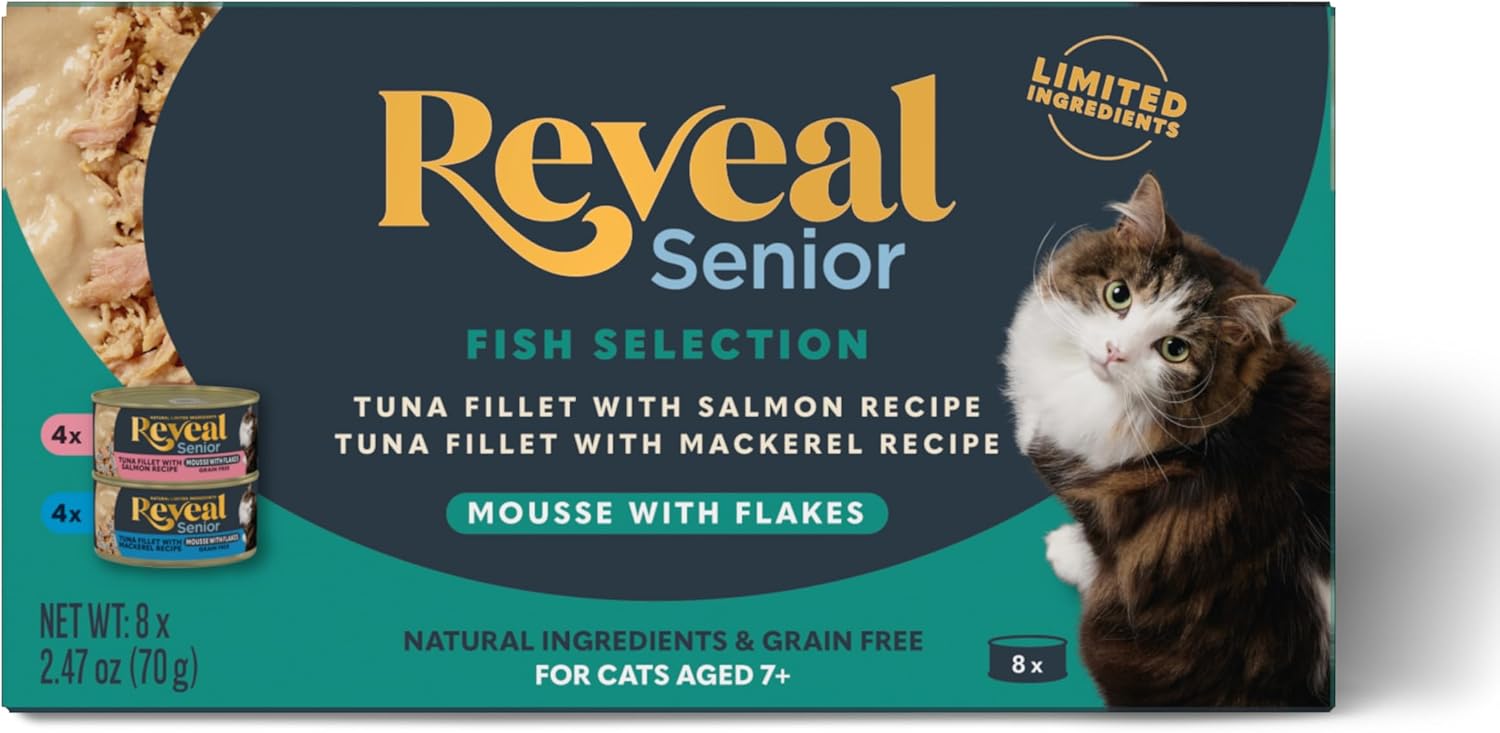
Reveal Natural Wet Senior Cat Food is a grain-free, limited-ingredient canned food designed specifically for older felines. The Tuna Fillet Flakes in Mousse variety features real tuna as the first ingredient, blended into a soft, smooth mousse that's easy for senior cats to eat. This 8-pack includes four cans of Tuna Fillet with Salmon and four of Tuna Fillet with Mackerel, offering a bit of variety to keep mealtime interesting.
This food is best suited for senior cats, especially those with dental issues, missing teeth, or picky eating habits. The mousse texture is gentle on sore gums and requires minimal chewing, making it a good choice for cats recovering from dental procedures or dealing with age-related mouth pain. It's also a solid option for any cat owner who wants to avoid artificial additives and fillers, as the recipe is made from just a few natural ingredients.
As a complementary food, Reveal's wet cat food is meant to be fed alongside a complete and balanced dry food. According to the feeding guidelines, you can offer up to two of these 2.47 oz cans per day as a topper or mixed with dry kibble. Many cat owners find that adding this mousse to their cat's routine helps increase hydration and entices reluctant eaters to finish their meals. The product's limited ingredient list also makes it a good candidate for cats with suspected food allergies or sensitivities.
Build quality is focused on ingredient purity rather than packaging, though the cans are standard and easy to open. Reveal is a B Corp certified company, which means they meet high standards of social and environmental performance. The brand emphasizes using natural, ethically sourced ingredients, which may appeal to cat owners who are conscious about sustainability and animal welfare.
One realistic limitation is the small can size. At 2.47 oz, each can provides only a modest serving, and for cats that eat wet food as their primary diet, this pack may not last long. Additionally, while many reviews praise the mousse texture for easy eating, a few cats did not enjoy it and preferred the brand's other products like shreds in broth. As with any new food, it's wise to introduce it slowly to avoid digestive upset.
Overall, Reveal Natural Wet Senior Cat Food is a practical choice for senior cat caregivers who prioritize clean ingredients and high-quality protein. The mousse texture is a standout feature for cats with dental issues, and the B Corp certification adds an extra layer of trust for conscious shoppers. While it's not the most budget-friendly option, the limited ingredient recipe and natural sourcing justify the premium price for many cat owners seeking the best for their aging feline friends.

Pros
- Tailored nutrition for senior cats with low phosphorus and high protein for kidney and muscle support.
- Variety pack keeps picky eaters engaged with different flavors and textures.
- High moisture content helps maintain hydration in older cats who may drink less water.
- Fiber from pumpkin supports digestive health in aging felines.
- Positive user reviews highlight improved kidney values and weight gain in senior cats.
Cons
- Some cats may reject certain flavors or textures; individual preferences vary.
- High protein and phosphorus levels may still be too high for cats with advanced chronic kidney disease without veterinary guidance.
- Price per can may be higher compared to standard senior cat foods.
The Tiki Cat Silver Variety Pack is a specialized wet cat food designed for senior cats aged 11 and older. As cats enter their golden years, their nutritional needs change, requiring higher quality protein to maintain muscle mass, lower phosphorus to support kidney function, and additional antioxidants to bolster the immune system. This product aims to meet those needs with a convenient variety pack that includes three recipes: shredded chicken, flaked salmon, and tuna with mackerel, all in a smooth mousse and shreds texture that is easy for older cats to eat.
This food is best suited for senior cat caregivers who are looking for a complete and balanced diet that addresses common age-related health concerns. It is also a good option for multi-cat households where an older cat needs a diet separate from younger, more active cats. The high moisture content is particularly beneficial for cats that may not drink enough water on their own, helping to prevent urinary tract issues and dehydration. According to user feedback, many cats with kidney issues or weight loss have shown improvement after switching to this food, with some owners reporting better kidney values and healthy weight gain.
In terms of real-world performance, the variety pack helps prevent mealtime boredom, which is common among senior cats who may become picky. The mousse and shreds texture is soft and easy to chew, making it suitable for cats with dental problems or reduced appetite. The inclusion of fiber-rich pumpkin supports gentle digestion, which can be a concern for aging digestive systems. However, as with any cat food, individual preferences vary, and some cats may not take to all flavors or the texture. A few reviews mention that their cats turned up their noses after initial acceptance, so it may require a gradual introduction.
Build quality is consistent with Tiki Cat's reputation for using real animal protein and natural ingredients. The cans are BPA-free, and the food contains no artificial colors, flavors, or preservatives. The low phosphorus formulation is a key feature for senior cats, as high phosphorus can exacerbate kidney disease. However, it's important to note that for cats with advanced chronic kidney disease, the protein and phosphorus levels may still need to be adjusted under veterinary supervision. The product is manufactured in Thailand and is available in the U.S. with a reasonable shelf life.
Cleaning and maintenance are straightforward: simply serve the food as is, and any leftovers can be stored in the refrigerator for up to three days. The cans are recyclable, and the packaging is compact for storage. One limitation noted by users is the uneven distribution of flavors in the variety pack, with some recipes appearing more frequently than others. This can be frustrating for owners whose cats prefer a specific flavor. Additionally, the price per can is slightly higher than standard senior foods, but many owners find the health benefits worth the cost.
Overall, the Tiki Cat Silver Variety Pack is a strong choice for senior cat owners who want a nutritionally tailored diet that supports kidney health, hydration, and immune function. It is particularly recommended for cats aged 11 and up that are generally healthy or have mild to moderate kidney concerns, but always consult with your veterinarian before making significant dietary changes for a senior cat with existing health conditions. For its targeted formulation and positive user feedback, this product earns a solid recommendation for those looking to provide specialized care for their aging feline companion.
The Nutritional Reality of Feeding Senior Cat Food to Younger Felines
Direct feeding decisions depend heavily on the exact age of the younger cat and whether the food serves as a temporary snack or an exclusive diet. Healthy adult cats between one and six years old can safely digest most senior formulas labeled for adult maintenance without suffering immediate harm. In contrast, growing kittens under twelve months of age face significant developmental risks if fed senior diets exclusively. Understanding why age boundaries exist helps owners navigate shared bowls, sudden food shortages, and multi-cat feeding schedules with confidence.
The Essential Difference: Adult Cats versus Developing Kittens
The biological gap between a developing kitten and a mature adult cat represents the most important factor when answering this dietary question. Kittens undergo rapid cellular division, skeletal expansion, and muscle accrual during their first year of life. Because of this intense physiological growth, young kittens require elevated levels of crude protein, essential dietary fats, calcium, and phosphorus. Senior cat formulas are deliberately tailored to support aging bodies, meaning they intentionally avoid the high-octane nutrient profiles found in dedicated kitten foods.
Feeding an older cat formula to a kitten over an extended timeframe can compromise bone mineralization and overall growth velocity. While a curious eight-month-old kitten that licks gravy from an older cat’s bowl will not suffer immediate poisoning, relying on senior food as their daily meal creates real developmental gaps. Kittens need concentrated caloric density in small serving sizes to fuel their active metabolism. Senior foods designed for slower lifestyles simply cannot meet those demanding growth thresholds.
Young adult cats between the ages of one and six occupy a completely different physiological space than kittens. Once growth plates close and skeletal maturity is reached, an adult cat’s nutritional baseline shifts from growth to biological maintenance. A young adult cat consuming senior food is generally safe from skeletal deficits because their primary bodily structure is fully formed. However, maintaining lean muscle mass and sustained energy still requires careful attention to daily protein intake and caloric density.
Deciphering the AAFCO Nutritional Adequacy Statement
Every commercial pet food package carries an Association of American Feed Control Officials (AAFCO) statement that defines its intended purpose. This statement indicates whether the recipe provides complete and balanced nutrition for gestation and lactation, growth, adult maintenance, or all life stages. Regulatory definitions do not actually recognize a distinct nutritional profile designated exclusively for senior cats. Instead, nearly all commercial senior diets are formulated to meet the nutritional levels established for adult maintenance.
Because senior diets typically satisfy adult maintenance standards, a healthy young adult cat can technically consume them without violating baseline nutritional minimums. For instance, classic wet foods like Purina Fancy Feast Wet Senior Cat Food 7 Years provide complete and balanced nutrition for mature adult felines. The key takeaway is that the food delivers essential vitamins, amino acids like taurine, and baseline fats required by any adult feline system. This official classification explains why young adults do not immediately decline when eating senior recipes.
Cat owners should always verify the exact wording on the product label before assuming a food is safe for routine feeding. Some specialized recipes are strictly formulated for mature felines aged eleven and older, while others serve broader age demographics. If a label specifies that the food is designed only for supplemental feeding, it should never form the core diet of any cat. Examining the adequacy statement provides factual clarity and eliminates guesswork regarding basic life stage compatibility.
Caloric Density and Energy Demands Across Life Stages
Metabolic rates fluctuate dramatically throughout a feline’s lifetime, influencing how many calories they need each day. Young adult cats typically spend hours engaging in predatory play, sprinting across rooms, and investigating their environment. This active lifestyle demands an energy-dense diet that replenishes burned calories without requiring massive meal volumes. Many senior cat foods moderate fat and calorie levels to accommodate sedentary older felines who sleep for the majority of the day.
When an active young cat consumes a low-calorie senior diet, they may struggle to maintain optimal body condition and muscle tone. The younger cat may constantly beg for food, exhibit hunger-driven behavioral changes, or gradually lose healthy body mass. To compensate for lower caloric density, the younger cat would have to ingest significantly larger portions of food. This increased volume can strain digestive capacity and lead to loose stools or stomach discomfort.
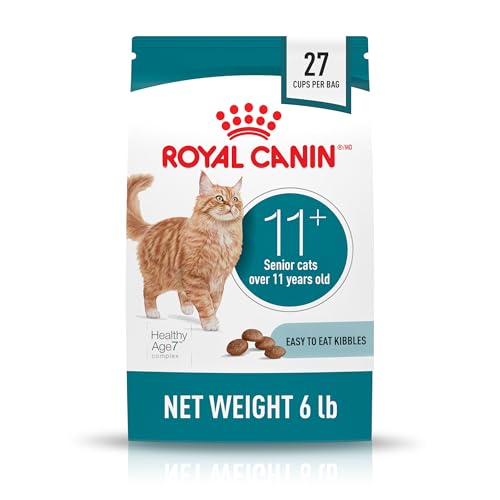
Interestingly, some geriatric formulas take the opposite approach by increasing caloric concentration to combat senior muscle wasting. Products such as ROYAL CANIN Feline Health Nutrition Aging 11+ Dry cat food offer energy-rich kibble specifically designed to help older cats maintain body weight when their appetites decline. If a moderately active young adult cat eats an energy-dense senior kibble without portion control, they risk unwanted weight gain. Tracking calorie content per cup or can prevents both accidental underfeeding and excess weight accumulation.
Mineral Adjustments: Understanding Phosphorus and Calcium Ratios
Mineral regulation is one of the most significant reasons manufacturers formulate specialized diets for senior cats. Aging cats frequently experience declining renal function, prompting food makers to moderate phosphorus content in mature recipes. Formulas like the Tiki Cat Silver Variety Pack specifically highlight low phosphorus levels alongside high protein to support older felines. Lower phosphorus levels reduce the filtration burden on aging kidneys, making it a staple strategy in senior feline nutrition.
While restricted phosphorus helps support aging kidneys, growing kittens and young cats have vastly different mineral demands. Young felines rely on ample phosphorus and calcium working in tandem to build strong bones, healthy teeth, and durable joint cartilage. Depriving a young cat of appropriate mineral ratios during vital growth phases can disrupt bone density and skeletal symmetry. For an adult cat with mature bones, moderate phosphorus is generally safe, provided calcium levels remain properly balanced.
Pet owners should avoid restricting dietary minerals for young cats unless a licensed veterinarian specifically diagnoses an underlying health condition. Arbitrarily reducing phosphorus in a healthy young adult provides no proven protective benefit and may complicate nutrient absorption. Evaluating the mineral content on the guaranteed analysis helps owners understand what their cat consumes. Matching dietary minerals to verified life stage requirements remains the safest approach for feline well-being.
Texture, Palatability, and Dental Accommodations
Dental health changes significantly as cats advance into their senior and geriatric years. Older felines often suffer from periodontal disease, missing teeth, or sensitive gums, making hard textures uncomfortable to chew. In response, manufacturers craft senior cat foods with ultra-soft pates, delicate shreds, and easily crushable kibbles. Products like Purina Fancy Feast senior pate feature smooth textures that require minimal chewing before swallowing.
Younger cats frequently develop strong preferences for these softer, aromatically enticing senior wet foods. Wet food formulas release intense aromas that appeal to feline olfactory senses, often making senior pates more attractive than standard adult kibble. A young cat may eagerly devour a senior canned food simply because they enjoy the velvety consistency and rich gravy. While soft food does not harm a young cat’s teeth, it does not provide the gentle mechanical abrasion sometimes associated with crunchy kibble.
If a young cat refuses their own food in favor of an older companion’s pate, texture preference is often the root cause. Pet owners can resolve this preference by offering adult-formulated wet food with similar moisture levels and shred styles. Transitioning the younger cat to an appealing adult wet recipe satisfies their craving for soft textures without compromising their nutrient profile. Catering to feline texture preferences while maintaining correct life stage nutrition keeps mealtime peaceful and balanced.
Functional Additives: Prebiotics, Fatty Acids, and Joint Support
Modern senior cat food recipes frequently incorporate specialized functional ingredients to address age-related physiological changes. Ingredients such as green-lipped mussel, fish oil, inulin, and pumpkin regularly appear on ingredient lists. For example, INABA Churu Entree Pate Senior Wet Cat Food Cup recipes include omega-3 fatty acids for joint health and inulin prebiotic fiber to promote beneficial gut bacteria. These additions aim to soothe stiff joints, aid sluggish digestion, and bolster immune resilience in aging bodies.
These functional additives are generally harmless and often beneficial when consumed by healthy younger adult cats. Omega-3 fatty acids like EPA and DHA support healthy skin, a glossy coat, and cognitive function in cats of any age. Similarly, gentle prebiotics and dietary fibers, such as the pumpkin found in I and love and you Feed Meow Tummy Wet Cat Food, help regulate digestion and stool quality. Younger cats digesting these ingredients will simply utilize the nutrients for cellular maintenance and coat condition.
However, pet owners should recognize that functional ingredients cannot substitute for appropriate core macronutrients. A food rich in joint supplements cannot compensate for inadequate protein or insufficient caloric density in a young animal’s diet. Functional compounds serve as helpful complements to an already balanced recipe rather than standalone nutritional solutions. When evaluating senior labels, prioritize primary protein sources and life stage adequacy before focusing on specialty supplements.
Managing Shared Feeding in Multi-Cat Households
Multi-cat households present unique logistical challenges when pets of varying ages live under the same roof. Free-feeding dry kibble in shared bowls almost guarantees that cats will sample each other’s food throughout the day. Younger, faster cats often push older, slower felines away from food dishes, consuming senior diets while depriving mature cats of necessary nourishment. Establishing organized mealtime routines is crucial for maintaining dietary boundaries and monitoring individual intake.
Implementing scheduled meal feedings in separate rooms eliminates competitive eating and bowl swapping entirely. Closing doors during feeding times gives older cats the quiet environment they need to eat slowly while younger cats finish their own adult meals. If separate rooms are impractical, pet owners can utilize microchip-activated feeding bowls that open only for a specific cat’s collar tag. This technology protects specialized senior food from curious younger cats and ensures each animal receives their designated formula.
In homes where complete separation is difficult, selecting versatile budget-friendly cat food choices formulated for all life stages or general adult maintenance can provide a safe communal baseline. Using a shared, complete adult food for open grazing while offering age-tailored wet foods in monitored individual sessions solves the coexistence dilemma. This hybrid strategy preserves household harmony while safeguarding individual feline health. Consistent mealtime oversight remains the most effective tool for managing diverse dietary needs.
Complete Meals versus Complementary Treats and Toppers
A common source of confusion among cat owners involves distinguishing complete-and-balanced meals from complementary food toppers. Several premium wet food products on the market are designed purely as meal enhancers or treats rather than sole diets. For example, Reveal Natural Wet Senior Cat Food Flakes feature limited ingredient tuna fillets in hydrating broth, offering exceptional protein and taste. However, complementary foods do not contain the complete vitamin, mineral, and amino acid spectrum required for daily survival.
Feeding a complementary senior topper to a younger cat as an occasional treat is completely harmless and provides an excellent hydration boost. Cats naturally possess a low thirst drive, making broths and high-moisture meat flakes valuable for urinary tract hydration. Problems only arise when pet parents mistake complementary cans for complete daily nutrition and feed them as the exclusive diet. Doing so over weeks or months will cause severe nutritional deficiencies in cats of any life stage.
Always check the packaging for statements such as “intended for intermittent or supplemental feeding only” to identify product classification. If the container lacks an adult maintenance adequacy statement, it must be paired with a complete commercial diet. Using complementary senior flakes as a topper over a younger cat’s balanced adult kibble adds flavor without undermining foundational nutrition. Clear label awareness protects young felines from accidental dietary imbalances.
Transition Guidelines and Veterinary Boundaries
If your younger cat has been eating senior food and needs to return to an adult formula, execute the transition gradually. Abrupt dietary shifts can disrupt the feline gastrointestinal tract, leading to vomiting, diarrhea, or acute food refusal. Begin by mixing twenty-five percent of the new adult food with seventy-five percent of the current senior recipe over several days. Slowly increase the proportion of adult food while decreasing the senior food to allow intestinal bacteria to adapt smoothly.
Monitor your cat’s energy levels, coat condition, and litter box habits throughout the transition period. Healthy adult cats should maintain a stable body weight, exhibit bright eyes, and produce firm, well-formed stools. If your younger cat displays persistent lethargy, digestive upset, or unexplained weight fluctuations during the switch, pause the progression and re-evaluate the recipe. Subtle sensitivities to specific protein sources or fiber levels can manifest during diet changes.
Individual medical decisions, therapeutic diet choices, and persistent health issues always warrant direct consultation with a licensed veterinarian. While general nutritional guidelines apply to typical healthy felines, underlying health conditions can alter metabolic priorities. A veterinarian can evaluate your cat’s body condition score, blood chemistry, and dental status to recommend precise nutritional parameters. Partnering with a veterinary professional ensures your feeding choices directly support your cat’s long-term health and vitality.
Feeding senior cat food to a younger adult cat on an occasional basis is generally safe, but kittens require dedicated growth diets to thrive. Keeping life stages, mineral ratios, and complete nutritional profiles in mind allows you to manage multi-cat households effectively. By respecting physiological boundaries and monitoring your cat’s body condition, you can make informed mealtime decisions that keep felines of every age healthy and satisfied.


Write Your Review
No reviews yet. Be the first to share your experience!