

You’ve read the ingredient list on that bag of kibble. Artificial preservatives, vague meat meals, and fillers that don’t do your cat any favors. Maybe your picky eater turns up their nose at every can you try, or maybe you’re just tired of guessing what’s really inside. That’s where homemade cat food comes in. It’s not complicated once you have the right guide. We’ve looked through dozens of recipes, premixes, and cookbooks to bring you the 10 Best Homemade Cat Food Recipes of 2026. These resources take the guesswork out of balanced nutrition, from taurine levels to proper vitamin ratios. Whether you want a full cookbook like Dinner PAWsible or a convenient premix like the Know Better Beef Recipe, these options let you control every ingredient. Many focus on grain-free, human-grade ingredients that support digestion and skin health. If you’re exploring other cat food choices, check out our guide to freeze-dried cat food for another convenient option. Homemade doesn’t have to be all-or-nothing — you can start with a few recipes and see how your cat responds. The key is using a complete, balanced formula, and these products deliver exactly that. Each one was chosen based on ingredient quality, ease of use, and real cat parent feedback. Ready to ditch the mystery ingredients? Let’s dig into the 10 Best Homemade Cat Food Recipes of 2026.

Pros
- Excellent resource for new cat owners seeking a healthier diet alternative
- Provides specific recipes for common health conditions like kidney disease and allergies
- 60-day meal plans simplify transitioning to homemade food
- Paperback extras add value with natural remedies and calming music
- Affordable price point compared to many commercial cat food options
Cons
- Currently has no customer reviews, so real-world feedback is limited
- Some cats may be picky about homemade recipes, requiring trial and error
- Paperback extras are only available with paperback purchase, not digital version
If you have ever worried about what goes into your cat's bowl, this book might be exactly what you need. The Homemade Healthy Cat Food guide is a 2-in-1 resource that combines nutritional education with a cookbook full of recipes designed for cats at every life stage. Whether you are a new cat owner or someone who has been caring for felines for years, this book helps you take control of your cat's diet with confidence. It covers everything from ingredient selection to meal planning, making homemade cat food approachable even for beginners.
The book is thoughtfully organized. The first part explains why homemade food can be superior to commercial options, offering guidance on essential nutrients, safe foods, and common mistakes. The second part delivers a wide variety of recipes, including meat-based, fish-based, and even vegetarian options. What stands out are the tailored sections for cats with specific health needs like kidney disease, allergies, and digestive issues. There are also 60-day meal plans for kittens, adults, and seniors, which take the guesswork out of daily feeding.
For cat owners concerned about health, this book addresses practical concerns such as weight management, dental health, and coat condition. The recipes use simple, whole ingredients, and the instructions are clear enough for someone who has never cooked for their cat. The inclusion of tips for food storage and safe preparation is helpful, especially for those who want to batch-cook and freeze meals. The paperback edition adds two extras: a guide to herbal remedies and a collection of calming music tracks, which can be a nice bonus for holistic care.
While the book is educational and well-structured, it is important to note that it has zero reviews at the time of this writing. This means there is no user feedback yet on how well the recipes work in practice. Additionally, every cat is an individual, and some may be picky eaters or have unique dietary responses. Consulting with a veterinarian before making major diet changes is always recommended, especially for cats with existing health conditions. The book itself acknowledges this and encourages working with a vet.
Overall, this guide is a solid investment for any cat owner who wants to explore homemade feeding. It is budget-friendly, comprehensive, and packed with usable information. The meal plans and health-focused recipes make it particularly valuable for owners of kittens, senior cats, or cats with chronic issues. If you prefer a digital format, note that the bonus extras are only available with the paperback. For a thoughtful gift for cat lovers or a personal tool to improve your cat's diet, this book delivers practical, actionable advice.

Pros
- Vet-approved recipes provide peace of mind regarding nutritional balance and safety for cats with specific health conditions.
- Easy-to-follow instructions make it accessible for complete beginners who have never cooked for a cat before.
- Includes practical meal prep and batch cooking tips that save time for busy cat owners.
- Comprehensive ingredient safety guide prevents accidental use of harmful foods like onions or garlic.
- Affordable compared to many premium commercial diets, especially for multi-cat households.
Cons
- Requires time and effort for meal preparation, which may not suit the busiest pet parents.
- Cats can be picky about new textures, so transitioning to homemade food may take patience and persistence.
- No recall or swap guarantee exists for recipes, so the book must be bought to access content.
The Homemade Cat Food Cookbook for Beginners by Dr. Christine Rodney is a practical guide designed for cat owners who want to take control of their feline's nutrition. It steps in when commercial foods fail to satisfy a picky eater or when health issues demand a tailored diet. This book offers a clear path to preparing balanced, vet-approved meals at home, focusing on whole ingredients and specific health management.
This cookbook is best suited for new cat owners who want to start on the right foot, as well as experienced cat parents looking to address chronic issues like kidney disease, diabetes, or food allergies. It also works well for budget-conscious owners who want to avoid expensive prescription diets. The instructions are straightforward, making it easy even if you have never cooked for a cat before. The portion control guidelines by weight and health condition help prevent overfeeding, which is a common concern for indoor cats.
In terms of cat acceptance, the recipes emphasize palatable ingredients, but individual taste preferences vary. Some cats may need a gradual transition from commercial food to homemade. The book includes tips for that transition, which can help reduce stress for both cat and owner. The health benefits are significant: cats on properly balanced homemade diets often show improved coat shine, better digestion, and more stable energy levels. For cats with specific conditions, the tailored recipes help manage symptoms and support overall well-being.
Build quality is not applicable to a physical book, but the content is well-organized with clear sections on ingredient safety, nutritional breakdowns, and batch cooking. The 125-page length covers a variety of recipes and practical advice without being overwhelming. It is self-published, so the quality of printing is standard, but the information appears solid and researched.
Ease of use is high for the recipes, but the daily commitment to cooking is a realistic limitation. For busy professionals, batch cooking on weekends can help save time. Cleanup involves standard kitchen tools, and most ingredients are common grocery items. One limitation to note is that cats can be finicky, so some owners may need to tweak recipes to suit their cat's taste. The book does not offer a guarantee or swap policy, but the knowledge gained is valuable.
Overall, this cookbook is a strong investment for any cat owner who wants to improve their cat's health through diet. It is especially useful for cats with chronic conditions, picky eaters, or owners who prefer natural, whole-food options. If you are ready to invest a bit of time in meal prep for better feline health, this guide provides the tools and confidence to get started.
Pros
- Easy to use - just add water and your choice of fresh meat for a nutritious meal
- Human-grade ingredients and holistic vet approval provide peace of mind for health-conscious cat owners
- Grain-free and low carb formula supports weight management and reduces allergy risks
- Versatile for raw or cooked feeding, and suitable for all cat ages and life stages
- Cost-effective alternative to commercial raw diets when compared to single-serve raw foods
Cons
- Requires separate purchase of fresh meat, so total cost may be higher than some conventional dry foods
- Transition from kibble to homemade raw or cooked meals may take patience and gradual adjustment for picky eaters
- Some cats may prefer the taste of commercial canned food over homemade recipes initially
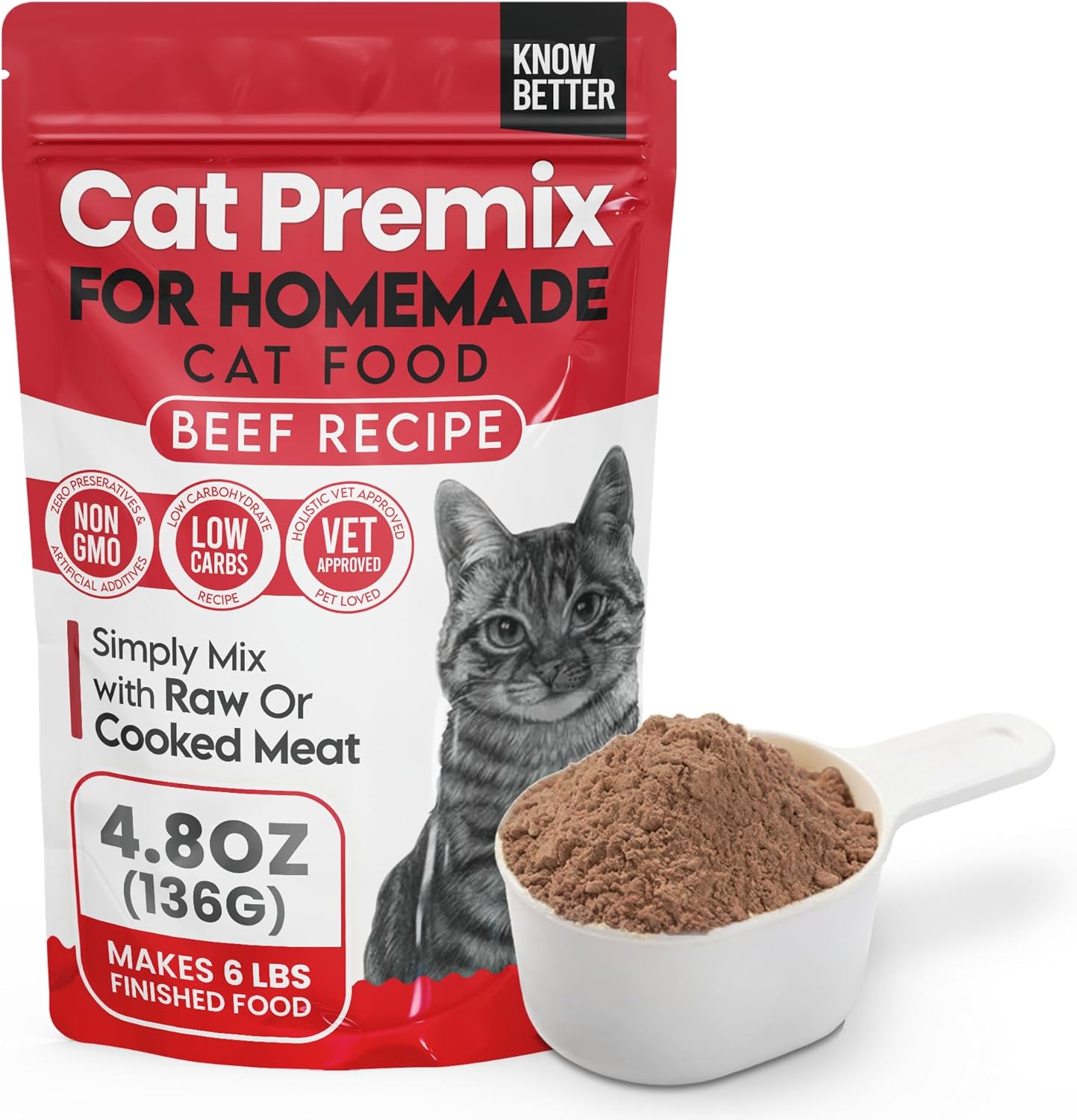
The Know Better Beef Recipe Premix is a dry powder supplement designed for cat owners who want to prepare homemade meals while ensuring complete and balanced nutrition. It is intended for both raw and cooked feeding methods, giving you the freedom to choose what works best for your cat. This premix is particularly suited for new cat owners exploring fresh diets, experienced raw feeders, multi-cat households, and those with kittens or senior cats who need tailored nutrition.
Based on product specifications and user feedback, this premix delivers consistent nutrition when combined with fresh meat. Many cat owners appreciate the simplicity of mixing powder with water and protein, as it removes guesswork from homemade diets. The grain-free, low carb, non-GMO formula appeals to those concerned about allergies, weight management, or artificial additives. Inclusion of whole food ingredients like egg yolk, chicken liver, and kelp provides natural vitamins without synthetic supplements.
In terms of cat acceptance, some felines transition smoothly from commercial food, especially when owners follow the gradual introduction plan outlined by the brand. However, a small number of cats may be hesitant to switch from familiar textures or flavors. The product is designed to be mixed with either raw or cooked meat, which can accommodate varying comfort levels regarding raw feeding safety. For multi-cat households, this single premix works well because it can be portioned per cat's individual needs.
Build quality and ingredient sourcing are strong points. The premix is made in the USA and all ingredients except the chicken liver powder are human-grade. There are no artificial colors, flavors, preservatives, or fillers. The packaging is a small resealable bag, and the powder mixes easily into a smooth consistency with water and meat. The formula is holistic veterinarian-approved, which adds credibility for health-conscious pet parents.
Daily use is straightforward: measure the premix, add cold water and fresh meat according to the provided ratio (0.5 cup premix + 1.5 cups water + 2 lbs meat). Store leftovers in the refrigerator. Cleaning involves typical food prep tools, and the premix itself requires no special cleaning. A minor limitation is that you must source your own meat, so overall cost and time investment are higher than scooping kibble. Additionally, cats accustomed to dry food may need a transition period lasting 2-3 weeks.
Overall, this premix is a practical choice for American cat owners who prioritize whole food nutrition and want to take control of their cat's diet without formulating from scratch. It works especially well for those who already purchase fresh proteins, have cats with grain sensitivities, or want a single product suitable for multiple cats of different ages. If you are comfortable with some meal prep and value high-quality ingredients, this premix offers a convenient path to homemade feeding.
To prepare homemade cat food with Know Better Beef Recipe Premix, combine 0.5 cup of premix powder with 1.5 cups of cold water and 2 pounds of fresh raw or cooked meat. Mix thoroughly until all powder is dissolved and blended with the meat. Portion into appropriate daily servings and refrigerate uneaten portions for up to 3 days, or freeze for longer storage.
This premix provides the essential vitamins, minerals, and amino acids needed to create a complete meal when paired with a quality protein source. It is grain-free, low carb, and made with human-grade ingredients. Always consult your veterinarian before making dietary changes, especially for cats with pre-existing health conditions.

Pros
- Provides a science-based rotation plan for homemade pet food.
- Recipes are analyzed to ensure nutritional completeness.
- Focuses on a meat-based diet that aligns with ancestral eating patterns.
- Written by a veterinarian, offering professional insight into pet nutrition.
Cons
- Requires time and effort to prepare homemade meals consistently.
- May not be suitable for pet owners who prefer the convenience of commercial pet food.
- Some recipes may require specific supplements that need to be purchased separately.
Dr. Becker's Real Food For Healthy Dogs and Cats is a comprehensive guide for pet owners who want to transition their furry friends to a homemade diet. This book, written by veterinarian Dr. Karen Becker, provides a rotation plan and recipes based on the ancestral diets of dogs and cats. It emphasizes a meat-based diet with appropriate levels of vegetables, fruits, and supplements, all analyzed to ensure nutritional needs are met. For cat owners concerned about the quality of commercial pet food, this book offers a practical alternative.
This resource is best suited for new cat owners, experienced cat parents, and those with multi-cat households who are willing to invest time in meal preparation. It's also ideal for budget-conscious pet parents who want to control ingredient quality and for cat owners concerned about health issues like allergies or weight management. The book's focus on a rotation plan helps prevent nutritional deficiencies and keeps mealtime interesting for picky eaters.
In terms of real-world performance, the book provides detailed recipes that are analyzed for nutritional completeness, which may help cat owners feel confident that their homemade meals meet their pet's needs. The emphasis on a meat-based diet aligns with the natural dietary preferences of cats, which are obligate carnivores. This approach may support better coat health, digestion, and overall vitality. However, it's important to note that preparing homemade food requires time, effort, and careful adherence to recipes to avoid nutritional imbalances.
Build quality is not applicable here as this is a book, but the content is well-researched and written by a veterinarian. The book includes 188 pages of practical information, recipes, and nutritional analysis. It's a paperback with dimensions of 6 x 0.43 x 9 inches, making it easy to store on a bookshelf or keep in the kitchen for reference. The publication date is March 28, 2018, so the information is relatively current.
Setting up a homemade diet plan involves reading the book, understanding the rotation concept, and sourcing ingredients. Daily use requires time for meal preparation, which may be a consideration for busy professionals. Cleaning is minimal since you're preparing fresh food, but you'll need to wash bowls and prep surfaces. The main limitation is the time commitment and the need to follow recipes precisely to avoid nutritional imbalances. Some cat owners may find it challenging to get their pets to accept new foods, but the rotation plan may help with variety.
Overall, this book is a valuable resource for cat owners who are dedicated to providing a homemade diet and are willing to invest the time and effort. It's particularly useful for those with health concerns about their pets or who want to avoid preservatives and fillers. However, it may not be the best choice for busy professionals or those who prefer the convenience of high-quality commercial cat food. For the right owner, this guide can be a stepping stone to better feline nutrition.

Pros
- Vet-developed recipes ensure nutritional balance for cats, based on NRC standards.
- Ingredients are common and easy to find in U.S. grocery stores; no exotic items required.
- Many cat owners report improved coat condition, higher energy, and better digestion after switching.
- Recipes can be made in bulk and frozen, saving time and effort week to week.
- Covers both cats and dogs, making it a valuable resource for multi-pet households.
Cons
- Some recipes require specific supplements like calcium, which may need separate purchasing.
- Does not include pork as a protein option (noted in some user feedback).
- Conversion for bulk cooking can be confusing; the book focuses on daily servings rather than large batches.
Dinner PAWsible is a cookbook dedicated to homemade pet food, with over 50 recipes designed for cats (and dogs). Written by Dr. Cathy Alinovi, a veterinarian certified in food therapy, the book's recipes follow National Research Council requirements for feline nutrition. This is not a raw diet guide but a collection of gently cooked meals using ingredients you might already have in your kitchen.
This book is best suited for cat owners who want to take control of what their cat eats. Whether you're a new cat owner looking for a healthy start, an experienced parent dealing with a picky eater, or managing a multi-cat household with different dietary needs, Dinner PAWsible offers practical solutions. Budget-conscious pet parents will appreciate that cooking at home can lower monthly food costs, and those with health concerns - like obesity, allergies, or digestive issues - may find relief through whole-food meals.
Based on user feedback, many cats instantly prefer these homemade dishes over commercial kibble. Owners report shinier coats, more energy, and fewer litter box issues. The recipes are straightforward: most call for a protein, a vegetable, a carbohydrate source, and a calcium supplement. While the book includes a guide on using eggshells as a calcium source, some reviewers mention that scaling recipes for bulk cooking requires extra math. The recipes do not include pork, which disappointed a few users, but the variety of proteins (turkey, beef, chicken, fish, shrimp) keeps meals interesting.
Build quality is standard for a paperback cookbook: 224 pages with clear formatting and a few illustrations. The book is lightweight and lies flat on the counter. Ingredients are readily available at any U.S. supermarket - no need for specialty pet stores. Cleanup is as simple as washing your pots and pans. The real work is in planning and preparing batches, but many owners find a weekly cooking session manageable.
A realistic limitation is that some recipes list supplements in milligrams, which may require a kitchen scale or extra research to convert to teaspoons. Also, the book's focus on daily servings means you'll need to multiply ingredients if you want to meal prep for a week. Despite these minor hiccups, Dinner PAWsible earns strong recommendations from cat owners who have seen tangible health improvements. It is an excellent entry point for anyone looking to transition their cat to a homemade diet, especially those already comfortable cooking for themselves.
Many cat owners who use Dinner PAWsible report noticeable health improvements in their pets. The recipes avoid fillers, artificial preservatives, and low-quality proteins often found in commercial cat food. By controlling the ingredients, you can tailor meals for weight management, allergies, or sensitive stomachs. The book includes guidance on balancing calcium and other nutrients, which is critical for long-term health. Users frequently mention shinier coats, improved digestion, and better stool quality. While results vary, the vet-approved foundation gives confidence that these meals meet feline nutritional needs.

Pros
- Developed by a veterinarian with 30+ years of holistic experience
- Recipes emphasize fresh, organic, and seasonal ingredients
- Simple instructions suitable for new homemade meal makers
- Focuses on essential nutrients like taurine and calcium via supplement line
- Helps reduce reliance on processed commercial cat foods
Cons
- Requires time and effort to source and prepare fresh ingredients
- Supplement line sold separately may increase overall cost
- Some cats may be picky about transitioning from commercial to homemade food
The Holistic Vet Blend Cookbook for Cats by Dr. Dody Tyneway, DVM is a comprehensive guide for cat owners ready to take control of their feline's diet. This cookbook features over 40 recipes designed to provide balanced, homemade meals using fresh proteins, greens, and wholesome ingredients. It's an excellent resource for both new cat parents and experienced owners who want to move away from commercial foods and embrace a more natural approach to nutrition.
This book is best suited for cat owners concerned about the quality and additives in store-bought diets. It's particularly helpful for those with picky eaters, cats with food sensitivities, or anyone looking to support their cat's overall health through diet. The recipes are straightforward, making it accessible even if you've never prepared homemade cat food before. Dr. Tyneway's expertise ensures each meal is nutritionally complete when paired with the recommended supplement line.
In terms of real-world performance, the cookbook emphasizes recipes that support a healthy gut microbiome and overall vitality. The focus on fresh ingredients may lead to improvements in coat condition, energy levels, and digestion, according to user feedback. However, transitioning a cat from kibble to homemade meals can take patience, as some felines are resistant to change. The book provides tips to ease this process.
Build quality of the book itself is solid, with 106 pages of clear instructions and nutritional guidance. The paperback format is durable enough for kitchen use. The recipes are designed to be practical for daily life, though they do require time for shopping and meal prep. Cleanup is minimal since you're cooking with standard kitchen tools.
One realistic limitation is the need to purchase the separate Holistic Vet Blend supplement to ensure proper calcium, taurine, and vitamin levels. This adds an extra step and cost. Additionally, not all cats will take to homemade food immediately, so patience is key. The book is best for owners committed to a long-term dietary change rather than a quick fix.
Overall, this cookbook is a valuable investment for cat owners who prioritize natural nutrition and are willing to invest time into meal preparation. It's a thoughtful gift for cat lovers interested in holistic care. For those ready to make the switch, it provides a trustworthy, vet-designed roadmap to healthier, happier cats through homemade meals.

Pros
- Over 35 quick recipes ready in 30 minutes or less, ideal for busy cat parents
- Nutritional guidance tailored for kittens, adults, and seniors, with serving sizes and vitamin/mineral info
- Uses real, wholesome ingredients like salmon, chicken, and pumpkin, avoiding fillers and artificial additives
- Beginner-friendly instructions and vet-approved concepts make homemade feeding accessible for new cat owners
- Cost-effective alternative to premium commercial cat food, with control over ingredient quality
Cons
- Some recipes may require specific ingredients not always on hand, potentially increasing grocery trips
- Transitioning a picky cat from commercial food to homemade meals may take patience and gradual introduction
- Print length of 138 pages may feel limited for those seeking an extensive variety of recipes
The Healthy, Delicious & Quick Cat Food Recipes Cookbook by Parisa Rogers is a practical guide for cat owners who want to prepare homemade meals for their feline companions. This book focuses on over 35 recipes that can be made in 30 minutes or less, covering everything from fish and poultry dishes to veggie-based meals and treats. It also includes a nutritional guide with serving sizes tailored for kittens, adult cats, and senior cats, making it a versatile resource for cat parents at any stage.
This cookbook is best suited for new cat owners who want to take control of their cat's diet, experienced cat parents looking to add variety, and gift buyers searching for a thoughtful present for cat lovers. It's also a great fit for budget-conscious pet parents who want to create high-quality meals at a fraction of the cost of premium commercial food. The recipes are designed to be beginner-friendly, so even if you've never cooked for your cat before, the step-by-step instructions make it easy to get started.
Based on the product description and user feedback, the cookbook emphasizes using real, wholesome ingredients like salmon, chicken, and pumpkin, which provide essential nutrients such as taurine and omega-3 fatty acids for heart, eye, and coat health. The nutritional guide helps owners understand serving sizes and vitamin needs, which can be especially helpful for new cat parents or those managing a cat's specific health concerns. The recipes are quick to prepare, taking 30 minutes or less, which is a major plus for busy professionals or multi-cat households where mealtime efficiency matters.
The book covers a variety of meal types, including fish-based, poultry, and meat dishes, as well as vegetable-rich options and treats. It also includes tips on introducing homemade food to picky eaters and avoiding common feeding mistakes. While the recipes use wholesome ingredients like salmon, chicken, and pumpkin, some cat owners may need to source specific items, and transitioning a cat from commercial food may require patience. The nutritional guide helps ensure balanced meals, but consulting with a veterinarian before making dietary changes is always recommended.
Build quality is solid for a paperback cookbook, with 138 pages of clear instructions and nutritional information. The book is lightweight and easy to store in a kitchen drawer or on a shelf. However, some users may find the recipe variety limited compared to more extensive cookbooks, and the 3.8-star rating based on 8 reviews suggests mixed feedback, though early reviews highlight its usefulness as a gift and its easy-to-follow format.
Overall, this cookbook is a good starting point for cat owners who want to explore homemade feeding without a huge time commitment. It's especially suitable for new cat parents, gift buyers, and those looking to avoid fillers and artificial ingredients in their cat's diet. While it may not replace a vet's advice for cats with specific medical conditions, it offers a solid foundation for incorporating fresh, balanced meals into your cat's routine.

Pros
- 300 diverse recipes covering meals, treats, and special dietary needs for cats of all ages.
- Uses common, affordable ingredients found in most kitchens, making it accessible for budget-conscious owners.
- Promotes better health through homemade nutrition, potentially reducing vet visits for diet-related issues.
- Simple instructions suitable for beginner cooks, with quick preparation times for busy pet parents.
Cons
- Requires time and effort to prepare meals, which may not suit owners with very busy schedules.
- Recipes may need vet approval to ensure complete and balanced nutrition, especially for cats with health conditions.
- Paperback format may get messy in the kitchen; not waterproof or stain-resistant.
The Homemade Cat Food Cookbook by Linda L. Kennedy is a practical guide for cat owners who want to take charge of their feline's diet. With 300 recipes spanning meals, treats, and special occasion dishes, this cookbook aims to make homemade cat food accessible, quick, and delicious. It's designed for a wide audience, from new cat owners to experienced pet parents, and is particularly appealing for those with multi-cat households or budget-conscious shoppers looking to reduce reliance on expensive commercial foods.
Based on the product description and user feedback, this cookbook emphasizes using simple, everyday ingredients that you likely already have in your kitchen. The recipes are crafted to be nutritious and tailored to cats' unique dietary needs, which can support overall health, coat condition, and energy levels. For cat owners concerned about additives and preservatives, this book offers a way to provide pure, homemade goodness. It also adds enrichment through variety, helping to prevent picky eating habits.
In terms of build quality, this is a standard paperback cookbook measuring 8.5 x 11 inches with 89 pages. It's lightweight at 10.2 ounces, making it easy to keep on your kitchen counter. The independently published format means the layout is straightforward, with clear instructions. However, it is not waterproof or stain-resistant, so you'll want to handle it with care while cooking. The publication date is December 2023, so the recipes are modern and relevant.
Ease of use is a key strength. The recipes are described as quick and easy, with minimal steps. Many cat owners may find that they can whip up a batch of cat food in under 30 minutes. The cookbook also likely includes tips on storage, portion control, and transitioning cats to homemade diets. For new cat owners, this can be a valuable learning tool. For senior cat caregivers, the recipes can be adapted for softer textures or specific health needs.
One realistic limitation is that homemade cat food requires consistent effort. Not every owner has the time to cook daily, though batch cooking and freezing may help. Additionally, it's important to consult a veterinarian to ensure the recipes meet your cat's specific nutritional requirements, especially for kittens or cats with medical conditions. The cookbook itself does not claim to replace professional dietary advice.
Overall, the Homemade Cat Food Cookbook is a solid investment for cat owners who enjoy cooking and want to improve their cat's diet. It's also a thoughtful gift for cat lovers. While it won't replace vet guidance, it provides a wealth of ideas to make mealtime more exciting and healthy. For budget-conscious families or those with multiple cats, this book can help reduce food costs while boosting feline well-being.

Pros
- Easy to use; takes minutes to prepare homemade meals.
- Contains essential nutrients like taurine and omega-3s.
- Trusted by holistic veterinarians for complete nutrition.
- Grain-free, ideal for cats with sensitivities.
Cons
- Requires purchasing and adding your own fresh meat, which may be less convenient than pre-made food.
- Some cats may need a gradual transition from dry food to raw or cooked meat.
- Premium pricing compared to conventional cat food.
The Know Better Chicken Recipe Premix is a powdered supplement designed to turn your choice of fresh meat into a complete and balanced meal for your cat. It belongs to the category of homemade cat food premixes and is particularly suited for cat owners who want full control over their pet's diet. This product works well for new cat owners, experienced cat parents, and those with kittens or senior cats, as it is formulated for all life stages.
Performance wise, the premix helps ensure your cat receives essential nutrients like taurine, which is critical for heart and eye health. According to user feedback, many cats accept meals made with this premix well, especially when gradually introduced. The product is made with human-grade ingredients and is free from artificial additives, which may reduce digestive issues in sensitive cats. For indoor cats or those prone to weight gain, the low-carb formula can support a healthy metabolism.
Build quality is solid: the premix comes in a sealed pouch to preserve freshness. It uses natural ingredients such as egg yolk, chicken liver, and kelp. No artificial colors or preservatives are included. The instructions are straightforward: mix 0.5 cup of premix with 1.5 cups of cold water and 2 lbs of raw or cooked meat. The process is simple and takes only a few minutes.
Cleaning is minimal since you are only handling the mixing bowl and utensils. The premix itself is dry and easy to store. However, you will need to handle raw meat carefully if choosing the raw option. For busy pet parents, this may add some time compared to opening a can of cat food. Also, some cats accustomed to dry kibble may need a slow transition over 2-3 weeks, as suggested by the manufacturer.
One realistic limitation is the price. At around $22 per pouch, it is more expensive than standard dry or wet cat food. However, considering that one pouch makes 6 lbs of fresh food, the cost per serving may be comparable to high-quality canned food. Another consideration is that the premix must be stored in a cool, dry place, and once mixed, the prepared food should be refrigerated and used within a few days.
Overall, this premix is an excellent choice for cat owners committed to providing fresh, homemade meals. It is especially beneficial for those who want to avoid fillers and artificial ingredients. While it requires a bit more effort than scooping kibble, the nutritional payoff can be significant. For multi-cat households or senior cats with specific dietary needs, this product offers flexibility and peace of mind. New cat owners may find it a good way to learn about homemade feeding without the complexity of creating a balanced recipe from scratch.

Pros
- Helps cat owners provide fresh, natural meals with controlled ingredients
- Includes recipes for picky eaters and cats with special dietary needs
- Craft projects add enrichment and bonding opportunities
- Compact book with 112 pages, easy to store and reference
Cons
- Only 20 recipes, which may feel limited for very dedicated home cooks
- Some cats may be hesitant to switch from commercial food to homemade
- Recipes require time and effort to prepare, not as convenient as commercial cat food
Cooking for Cats by Debora Robertson is a delightful and practical cookbook designed for cat owners who want to take control of their feline friend's diet. This 112-page book offers 20 mouth-watering recipes for homemade cat food, from everyday treats to special occasion dishes, all made with readily available, inexpensive ingredients. It's an ideal resource for new cat owners, experienced cat parents, and gift buyers looking for a thoughtful present for the cat lover in their life.
The book is organized into helpful chapters: The Cat's Larder covers essential nutrition and feeding guidelines, followed by Everyday Treating, One-pot Dishes, Treats and Special Occasions, and Feel-better Food for sick or recovering cats. Recipes include Sardine Omelette, Chicken Soup, Turkey and Squash Meatballs, and even Birthday Cake Muffins. The advice on cat nutrition is thorough, explaining what foods are safe and how to balance meals for different life stages.
Beyond recipes, the book adds real value with simple craft projects such as a fishing pole toy, scratching post, indoor kitty garden, and catnip mouse. These enrichment ideas help keep cats mentally stimulated and physically active, which is especially beneficial for indoor cats or multi-cat households. The instructions are clear and easy to follow, requiring minimal supplies.
The build quality of the book itself is solid a compact paperback with dimensions 5.55 x 0.67 x 7.52 inches, making it easy to keep in the kitchen. The language is warm and encouraging, written by an experienced food writer who clearly understands cats. While the book doesn't include lab-tested feeding charts, the guidance aligns with general veterinary recommendations for balanced homemade diets.
One realistic limitation is that not all cats may readily accept homemade food, especially if they are used to commercial diets. The transition may require patience and gradual mixing. Also, the book contains only 20 recipes, which some dedicated home cooks might find limiting for long-term variety. However, the batch cooking suggestions help make the most of each recipe.
Overall, Cooking for Cats is a wonderful starting point for cat owners who prioritize natural nutrition and enjoy DIY projects. It's particularly suited for health-conscious pet parents, budget-conscious households (since homemade can be cheaper), and as a unique gift. Combine it with a few simple ingredients from your pantry, and you'll be ready to whip up healthy meals and toys that your cat will love.
This book provides essential guidance on feline nutrition, helping cat owners understand what ingredients are safe and beneficial for their pets. The Cat's Larder chapter covers the basics of a balanced diet, including protein sources, essential fatty acids, and foods to avoid. Recipes are designed for both everyday feeding and special occasions, with options for sick or recovering cats that emphasize easily digestible, aromatic foods to tempt a reduced appetite.
The author emphasizes using simple, whole ingredients like chicken, fish, vegetables, and brown rice, avoiding artificial additives. Batch cooking tips allow owners to prepare several meals at once, saving time and money. Portion suggestions are included, though owners should adjust based on their cat's size, activity level, and health needs.
Beyond feeding, the book includes several simple craft projects that promote enrichment and play. These include a fishing pole toy, a scratching post, an indoor kitty garden, a catnip mouse, and a cardboard cat playhouse. Each project uses common household materials and is designed to engage a cat's natural instincts to hunt, scratch, and explore.
These activities are especially valuable for indoor cats or multi-cat households where mental stimulation can reduce boredom and behavioral issues. The instructions are straightforward, making them accessible even for owners who aren't particularly crafty.
Frequently Asked Questions About Best Homemade Cat Food Recipes
Is homemade cat food nutritionally complete?
Yes, if you follow a properly formulated recipe or use a balanced premix like Know Better Beef Premix. These products include essential taurine, omega-3s, and vitamins. Without a complete formula, homemade diets can lack vital nutrients, so sticking to vet-approved sources is critical.
How do I transition my cat from kibble to homemade food?
Go slow. Start by mixing 25% homemade with 75% current food, then gradually increase over 7-10 days. Cats can be picky, so patience helps. Many cookbooks like Healthy, Delicious & Quick Cat Food Recipes include transition tips. If your cat has a sensitive stomach, consult your vet before switching.
What ingredients should I avoid in homemade cat food?
Never use onions, garlic, grapes, raisins, or chocolate. Avoid raw egg whites (they can cause biotin deficiency) and too much liver (vitamin A toxicity). Stick to recipes from trusted sources like Dr. Becker’s book or the Know Better premix guidelines. For more on senior cat nutrition, see our senior cat food recommendations.
How long does homemade cat food last in the fridge?
Cooked homemade cat food typically keeps 3-5 days in an airtight container in the refrigerator. You can freeze portions for up to 2-3 months. Thaw in the fridge overnight before serving. The Know Better premixes make small batches — a 4.8 oz pouch yields about 6 lbs of food, perfect for weekly prep.
Can kittens and senior cats eat homemade food?
Yes, but their nutritional needs differ. Kittens need more protein and calcium, while seniors may require lower phosphorus and more joint support. Recipes in books like The Holistic Vet Blend Cookbook include life-stage variations. The Know Better premixes are labeled as kitten- and senior-friendly. Always check with your vet for specific dietary adjustments.
Do I need to add supplements to homemade cat food?
It depends on the recipe. Many complete premixes, like Know Better Chicken Recipe, already contain taurine, vitamins, and minerals — you just add meat and water. If you’re following a cookbook recipe, look for one that specifies supplement amounts. Books by veterinarians, such as Dr. Becker’s, include balanced supplement guidance.
Is it cheaper to make homemade cat food than buy commercial?
It can be, especially for multi-cat households or when buying meat in bulk. A premix like Know Better makes 6 lbs of food for about $21.95 — roughly $3.66 per pound, comparable to premium wet food. But costs vary by meat choice. Plus, you avoid markups on specialty diets. For budget-conscious owners, books like Homemade Cat Food Cookbook by Linda Kennedy offer affordable recipes.


Write Your Review
No reviews yet. Be the first to share your experience!