

Feeding a companion animal requires balancing energy needs, daily activity, and specific life stages. Figuring out how much food to feed a cat daily can feel overwhelming when packaging labels offer broad feeding ranges rather than individualized recommendations. Choosing the right portions prevents accidental weight gain while ensuring essential vitamins, taurine, and dietary fats remain consistent in your pet’s bowl. Exploring quality options like everyday cat food choices gives owners a helpful starting point for establishing balanced meals.
Whether your feline thrives on crunchy kibble, moisture-rich canned recipes, or a carefully balanced combination of both, structured meal planning makes a measurable difference. Free-feeding dry food often encourages mindless grazing, which can lead to rapid weight gain and sluggish digestion over time. Investing in reliable portioning tools and researching budget-friendly cat food choices enables caretakers to manage portion sizes with confidence. Establishing consistent mealtimes sets the foundation for a vibrant, energetic companion across every life stage.



A Complete Guide to Determining Daily Feline Feeding Portions
Determining the correct daily ration for an indoor or outdoor cat requires balancing daily calorie needs with practical meal schedules. A general adult cat weighing roughly ten pounds typically requires between two hundred and two hundred and fifty calories each day, depending on metabolism and activity levels. Rather than guessing portion sizes, owners should calculate energy density directly from packaging labels. Pairing calibrated measurements with structured feeding routines establishes dependable nourishment while protecting long-term mobility and organ health.
Calculating Calorie Requirements and Energy Demands
Resting energy requirements change depending on a feline’s age, neuter status, and daily exercise habits. Neutered indoor adult felines generally have slower metabolic rates than active, intact companions or energetic outdoor explorers. Because energy demands differ across individual animals, calculating calories rather than measuring arbitrary volume is the safest approach. Pet owners can use the kilocalories per kilogram or kilocalories per cup listed on pet food packaging to determine exact volumetric requirements.
Small variations in daily calorie consumption can yield noticeable physical changes over several months. Feeding just twenty extra calories each day can gradually lead to excess body fat, which places unnecessary strain on feline joints. When formulating feeding plans, calculating maintenance energy requirements gives caretakers an objective baseline. You can consult with a primary veterinarian to adjust these targets if your cat requires active weight reduction or post-operative recovery support.
Decoding Feeding Guidelines on Commercial Food Packaging
Pet food labels provide feeding tables based on average body weight brackets, but these values represent broad general guidelines rather than strict rules. Most manufacturers list feeding amounts that assume an active, unneutered animal, which may exceed the actual caloric burn of a quiet apartment feline. Relying solely on the high end of a feeding chart frequently results in chronic overfeeding. Caretakers should treat bag guidelines as a starting point and fine-tune actual meal sizes according to ongoing physical observations.
Examining the Guaranteed Analysis panel helps clarify how nutritional density influences portion size. Dry kibbles often provide higher caloric concentrations per cup compared to moisture-heavy canned recipes. When reviewing balanced feline nutrition choices, comparing energy concentration per serving prevents inadvertent overeating. Understanding whether the printed values reflect an as-fed basis or a dry-matter basis ensures your calculations match your cat’s actual intake.
Adapting Portions Across Kittens, Adults, and Senior Life Stages
Life-stage designations directly dictate daily nutrient needs and caloric distribution. Growing kittens require substantial amounts of protein and dietary energy to support rapid tissue growth, skeletal development, and immune health. Because young kittens possess small stomachs, dividing their total daily ration into three or four frequent meals prevents digestive upset. As growth tapers off around ten to twelve months, caloric density should transition toward maintenance levels to avoid sudden weight surges.
Mature adult cats benefit from controlled portions that preserve lean muscle mass without encouraging abdominal fat deposits. Indoor lifestyle formulas often adjust fiber and fat balances to help manage hairballs and support healthy weight retention. Keeping energy intake aligned with daily movement patterns prevents the gradual lethargy associated with adult weight gain. Routine monitoring ensures portions adapt whenever household routines or environmental stimuli shift.
Senior companions frequently present unique nutritional challenges that demand careful portion oversight. Older felines may experience diminishing digestive efficiency or underlying kidney and dental issues that influence appetite. Some older felines lose weight and require easily digestible, calorie-dense textures, whereas others become sedentary and need reduced portions. Caretakers monitoring aging pets can explore alternative cat diet options to maintain steady interest at the feeding dish.
Comparing Canned Wet Food and Dry Kibble Portion Densities
Comparing wet food portions with dry kibble portions highlights significant differences in moisture content and volume. Wet canned foods contain approximately seventy to eighty percent water, offering high volumetric satisfaction with moderate caloric density. A typical three-ounce can of wet pate might supply between seventy and ninety calories, allowing a ten-pound cat to enjoy multiple fulfilling dishes each day. The added moisture in canned food also supports regular hydration and urinary tract health.
Dry kibble recipes contain minimal moisture, condensing carbohydrates, fats, and proteins into tightly compacted nuggets. Because dry food is energy-dense, even a quarter-cup serving can deliver over one hundred calories. Measuring kibble by volume using kitchen cups often introduces unintended portion discrepancies. Utilizing a precise digital gram scale provides far greater consistency and protects against accidental overfeeding over time.
Meal Feeding Schedules Versus Free-Feeding Habits
Leaving bowls of dry food out for continuous grazing remains a widespread practice, but it carries notable risks for indoor cats. Free-feeding ignores natural feline hunting rhythms, which typically revolve around multiple small, discrete hunting efforts throughout the day. Constant food availability often leads to mindless boredom eating and makes tracking early appetite loss nearly impossible. Switching to scheduled meals restores structure and allows owners to immediately notice changes in consumption.
Dividing the total daily food allocation into two, three, or four distinct meals mirrors natural feline biology. Spaced feedings keep blood sugar levels steady and reduce begging behaviors between meal windows. For households with multiple cats, scheduled meals eliminate competitive eating and prevent dominant pets from consuming another cat’s ration. Establishing fixed morning and evening meal routines fosters domestic predictability and peaceful mealtimes.
Utilizing Smart Timed Feeders for Accurate Portion Control
Automating mealtimes with programmable feeding devices removes human guesswork and ensures consistent portions throughout the week. Devices like the Automatic Cat Feeder – 4L Timed Auto Pet Feeder allow owners to schedule up to six customizable daily meals using precise portion increments. The four-liter storage hopper keeps kibble protected from ambient moisture and curious paws, while the stainless steel bowl helps reduce feline chin acne. Such automated dispensers are particularly beneficial for busy professionals who cannot return home during mid-day feeding windows.
Managing wet food portions on a schedule requires specialized equipment designed to preserve freshness over several hours. The Automatic Wet Food Cat Feeder provides dual independent bowls holding up to twelve ounces each, complete with a dedicated ice pack compartment. Its integrated smart timer allows caretakers to plan two pre-portioned meals up to forty-eight hours in advance without worrying about food spoilage. Removable BPA-free trays simplify regular cleanup and ensure perishable canned food remains sanitary and palatable.
Managing Fast Eaters and Bolting Behaviors with Enrichment Toys
Cats that consume their meals too quickly frequently experience regurgitation, an issue commonly referred to as scarf and barf. Ingesting large quantities of dry kibble without adequate chewing introduces excess air into the stomach, prompting rapid digestive rejection. Slowing down rapid eaters requires engaging tools that transform mealtime into an interactive mental puzzle. Pacing intake allows stomach stretch receptors sufficient time to signal fullness to the feline brain.
Interactive puzzle dispensers like the PetSafe Slimcat Feeder Ball Cat Toy, Green distribute daily kibble rations across active play sessions. The device features adjustable openings that accommodate various kibble sizes, forcing the feline to bat the ball across the floor to retrieve individual pieces. This slow-feeding approach improves digestive ease while encouraging physical exercise to combat indoor obesity. Introducing enrichment toys provides crucial mental stimulation that curbs indoor boredom and destructive habits.
Structuring Mixed Feeding Plans Without Overlapping Calories
Combining wet canned food with dry kibble offers the hydration advantages of wet food alongside the convenience of dry biscuits. However, managing mixed diets requires strict mathematical discipline to ensure total daily calorie thresholds remain balanced. Many owners mistakenly offer a full can of wet food while still leaving a full dish of kibble out, inadvertently doubling daily energy intake. The correct technique involves reducing the kibble allocation proportionally whenever wet food is introduced into the daily routine.
For instance, if a feline requires two hundred calories daily, you might allocate one hundred calories to a morning wet meal and one hundred calories to measured dry kibble. This fifty-fifty split provides optimal hydration while retaining the crunch and texture cats often appreciate. Recording these portion ratios on a dedicated chart prevents miscommunications among family members who share feeding duties. Consistency in measuring both food types prevents unexpected weight gain.
Maintaining a Clean and Dedicated Feeding Station
Establishing an organized, quiet feeding zone is essential for reducing mealtime stress and maintaining household hygiene. Felines possess sensitive whiskers and prefer eating in undisturbed areas away from bustling foot traffic, loud appliances, and litter boxes. Using protective feeding mats like the Terrazzo Stone Colorful Dog Cat Food Mat,Absorbent shields delicate flooring from stray kibble and spilled water. Its non-slip rubber backing secures bowls firmly in place, preventing dishes from sliding across the floor while pets eat.
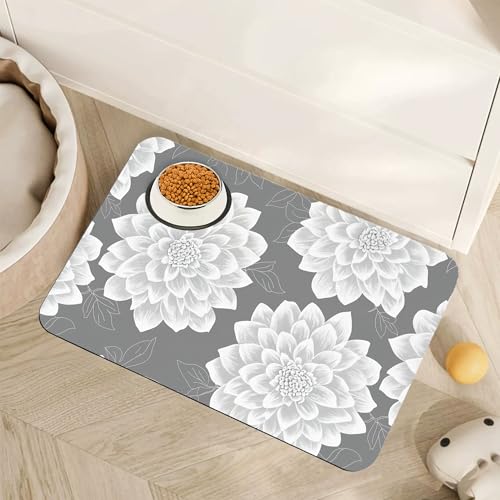
Similarly, decorative options like the Dahlia Dog Cat Food Mat,Gray White Flowers offer an absorbent surface that traps mealtime messes and cleans easily with a damp cloth. Maintaining sanitary feeding accessories prevents bacterial accumulation that could taint food and deter fastidious eaters. Washing bowls daily with warm soapy water removes leftover oils and food residues that harbor unpleasant odors. A fresh, calm feeding station encourages calm meal consumption and healthy digestion.
Monitoring Body Condition Scores and Calibrating Portions
Visual evaluations and physical touch provide the most reliable indicators of whether daily feeding portions require recalibration. Weighing your cat once a month on an accurate scale helps detect subtle fluctuations before significant weight gain or loss occurs. Pet owners should also learn to assess body condition by gently feeling along the ribcage and spine. In an ideal body condition, ribs should be easily felt beneath a slight fat layer without pressing deeply.
Observing your cat from above should reveal an obvious waistline behind the ribs, while a side view should display a clear abdominal tuck. If the ribs feel prominent and sharp with no overlying fat, daily portions likely need a modest upward adjustment. Conversely, if ribs cannot be felt beneath a dense layer of tissue, caloric intake should be decreased gradually. Consulting with a veterinary professional ensures that any portion reductions remain safe and nutritionally sound.
Fine-tuning your cat’s daily food intake requires ongoing attentiveness, accurate portion measuring, and the right feeding tools. By calculating energy requirements, spacing meals across the day, and adjusting for life stages, you create a sustainable routine that supports feline health. Combining high-quality food with mindful portion management protects your cat from obesity while sustaining daily vitality and companionship for years to come.




Write Your Review
No reviews yet. Be the first to share your experience!